



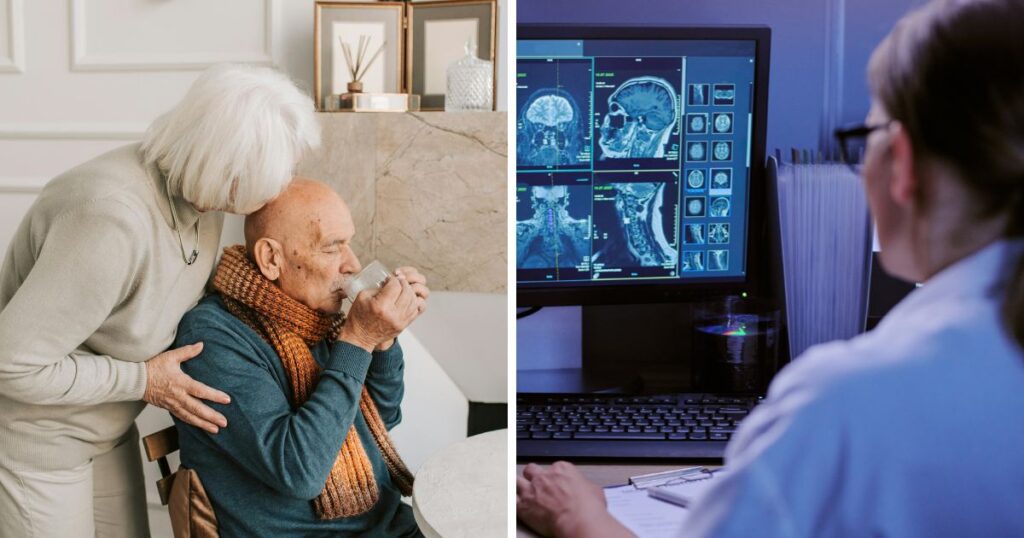
Over the years, the United States of America has witnessed a rapid rise in the number of dementia cases. An estimated 7 million people in the country are living with Alzheimer’s, and the number is expected to reach its peak by 2050. The disease primarily affects senior citizens. An analysis by John Hopkins Medicine has revealed that dementia affects an estimated 42 percent of adults over the age of 55.
Thus, it has become a growing public health challenge. And now, recent research suggests that regularly playing brain training games might actually reduce the risk of developing the condition in the first place.
AI is helping to preserve the cognitive health of the elderly. Brain-training games that adapt to the user’s level help keep the mind sharp, delaying the onset of symptoms for those at risk of dementia or Alzheimer’s.
— Hardeep (@hardeep_singh63) January 9, 2026
80-year-old Phyllis Walter became one of the key participants in the research to find the best resolution against dementia. As per NBC News, Walter was in her 50s when she began noticing early signs of memory lapse. She used to even forget words while trying to communicate. What she initially deduced as mere signs of aging soon disclosed itself to be the preliminary signs of dementia. Fast forward to now, her memory is sharper than ever, thanks to regularly playing brain-training games.
Speaking with NBC News’ Erika Edwards, Phyllis explained how her life has turned around ever since she started playing brain training video games. These include some really effective speed training exercises, which have dramatically improved her cognitive skills and functioning.
Discussing it, she said, “It turned my life around. I found my brain was sharper than it had been when I was 17.” Phyllis Walter’s case study is actually backed by a 20-year-old study, which has shown benefits in her case. Conducted by John Hopkins Medicine, it involved 3000 adults over 65 years of age to test brain training effects.
Cognitive training games were once very popular and then received bad press for lacking evidence. This included a lawsuit aimed at Lumosity in 2016 for making claims that were not backed up by science.
Since then, the evidence has been mounting and we have learned a lot about… pic.twitter.com/18CTCx0UOE
— Christin Glorioso, MD PhD🏳️🌈 (@DrGlorioso) November 25, 2025
Participants were made to test memory, reasoning and speed training through the Brain HQ platform. The results showed speed training showing the strongest effect among all. The game Double Down has been proven to reduce dementia risk by about 25 percent.
Its benefits may last up to 20 years. To put in place, speed training adapts the level of difficulty to individual performance. Experts believe that this could be one of the modest, non-drug interventions that can potentially delay dementia. In extension, these brain training speed games can also reduce healthcare costs in the long run.
Interestingly, senior citizens are also often found engaging themselves in puzzles and crosswords during leisure time. But based on research and study, these brain training games are even more effective since they target specific cognitive weaknesses in an individual. Whereas puzzles and crosswords merely continue to rely on already practiced skills, and no changes or experiment may be required. They primarily exercise memory recall and do not promote problem-solving or adaptive thinking skills.
Aside from the primary research, experts at John Hopkins also conducted booster sessions in order to record if the benefits were maintained. Now experts further suggest that benefits can be reaped earlier if individuals start to train their brain by their 40s or 50s.
However, it is important that brain training is accompanied by a healthy lifestyle that incorporates exercise and social engagement. These two tenets cannot possibly be replaced by mind training games. It is also important to remember that some neuroscientists have sounded caution, since evidence for brain games preventing dementia and Alzheimer’s is still limited.


