



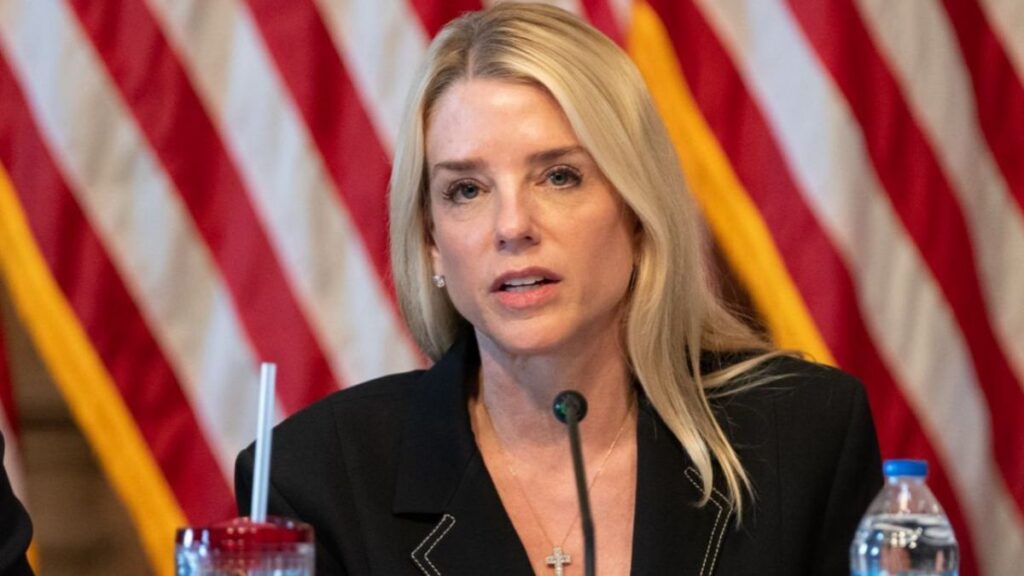
A watchdog group urged Pam Bondi’s Justice Department’s inspector general to review how the department follows the Epstein Files Transparency Act. They argued that the government’s public release of millions of records missed communications from leading Trump administration law enforcement officials who managed the response to requests for the files.
In the letter dated February 6, 2026, leaders of the Democracy Defenders Fund stated that the Justice Department’s final production under the law did not include emails or official communications from Bondi, Deputy Attorney General Todd Blanche, or FBI Director Kash Patel, even though they played public roles in handling Epstein-related disclosures.
The group sent the letter to Don R. Berthiaume, the acting inspector general, calling it a second follow-up to a prior audit request. They noted that on January 30, the Justice Department released over 2 million additional files, with Blanche stating at that time that the release marked the end of a thorough document identification and review process meant to ensure transparency and compliance with the act.
The Democracy Defenders Fund said its review of the January 30 release found widespread noncompliance. They then highlighted a more fundamental issue regarding the extent of the department’s search and what it produced.
The letter explained that the law mandates the release of all unclassified records related to Jeffrey Epstein or Ghislaine Maxwell. This includes internal Justice Department communications and other categories beyond investigative case files.
The group pointed out that the Justice Department seemed to take a narrower approach. They mentioned that the department told Congress it reviewed documents related only to the investigations and prosecutions of Epstein and Maxwell. It described its sources as specific criminal cases and investigations, along with an inspector general review of Epstein’s death.
“If true, the scope of review by the DOJ would be much more limited than required under the EFTA,” the letter stated.
To highlight the issue, the group conducted keyword searches of the publicly posted “Epstein Library” for communications from Bondi, Blanche, and Patel. They remarked, “Surprisingly, we found only a few official emails or communication records from these officials.”
The group called the lack of records “deeply troubling.” They argued that those officials have been central to the DOJ’s response, or lack of response, to public and congressional requests for the Epstein files. They insisted that the “Epstein Library” should contain many of their communications.
The letter did acknowledge that limitations in search tools and optical character recognition might mean some records exist but did not show up in the search results. Still, they reported finding only two documents with Patel’s email display name and did not find emails tied to Bondi’s or Blanche’s display names. They also found emails addressed to Blanche that seemed to date back to his time in private practice.
“The clear conclusion is that these communications have been withheld, destroyed, or redacted to the point that they are untraceable in the Epstein Library,” the letter said.
The group argued that the law’s limited exceptions should not justify the wholesale withholding or redaction of emails from the attorney general, deputy attorney general, or FBI director if the records are within the review’s scope. They also asked the inspector general to investigate whether any federal records were destroyed. They noted that the email records from those offices are permanent records under federal rules and that improper destruction could violate the Federal Records Act.
The letter requested that the inspector general start an audit immediately.


