



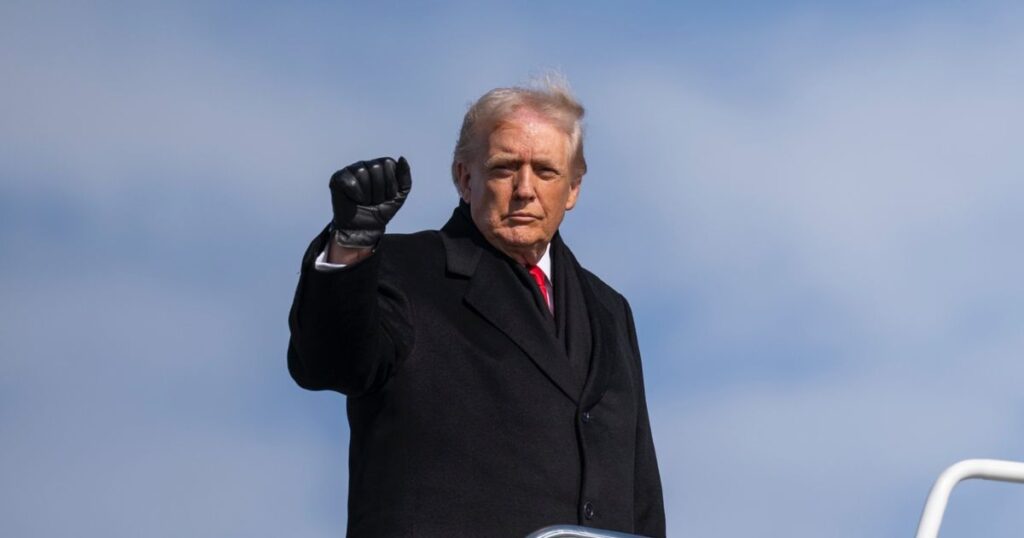
President Donald Trump expressed his desire for home prices to rise, not fall, as his administration promotes lower interest rates and restrictions on large investors to make homeownership easier.
During a Cabinet meeting at the White House on Jan. 29, Trump stated he aimed to help Americans buy homes by lowering borrowing costs while also protecting current homeowners from falling property values. “I don’t want to drive housing prices down. I want to drive housing prices up for people that own their homes,” Trump said per PEOPLE, continuing: “And they can be assured that’s what’s going to happen.”
He emphasized that lower rates would help buyers qualify for mortgages, even if home values increase. Trump believes homeowners should retain the wealth they have built through rising values and does not want to “destroy the value” of existing homes.
These remarks came as housing affordability remains a major issue. The Federal Housing Finance Agency’s house price index reported that U.S. single-family home prices rose in November, continuing gains that economists say prevent many potential buyers from entering the market.
Trump has also urged federal housing agencies to lower mortgage rates. On Jan. 7, he instructed officials to purchase $200 billion in mortgage-backed securities, and Federal Housing Finance Agency Director Bill Pulte stated that Fannie Mae and Freddie Mac would carry out the purchases. After the administration started buying the bonds, Reuters reported a drop in U.S. mortgage rates.
BREAKING: President Trump says he wants to “drive housing prices up for people who own their homes.”
“For people that own their homes, we are going to keep them wealthy,” Trump says. pic.twitter.com/ZhgIhONXRz
— The Kobeissi Letter (@KobeissiLetter) January 29, 2026
Analysts have raised concerns about how much the bond buying could lower overall housing costs. Economists mentioned that the strategy is unlikely to significantly improve affordability without an increase in homes for sale, particularly in the lower end of the market.
Trump has combined the rate strategy with an executive order targeting institutional ownership of single-family housing. On Jan. 20, he signed an order titled “Stopping Wall Street from Competing with Main Street Homebuyers,” which directs federal agencies to review regulations affecting large institutional investors who acquire or hold single-family homes and to consider changes to alleviate speculative pressure.
The White House stated that the order fulfills Trump’s commitment to combat large investors and aims to expand homeownership while reducing competition for single-family homes. Housing researchers indicate that large investors represent a small share of the single-family market in most areas and argue that supply continues to be the main factor driving prices.
Trump connected his housing message to his efforts to reshape the Federal Reserve. According to Reuters, Trump intended to announce his choice for Fed chair after meeting with former Fed governor Kevin Warsh. Trump expressed a desire for lower interest rates and nominated Warsh on Jan. 30.
Trump’s comments reveal the conflict between assisting potential buyers and protecting existing homeowners. At the Cabinet meeting, he portrayed rising prices as beneficial for those who already own property while characterizing lower borrowing costs as the means to keep purchasing attainable.
Economists often point out that lower mortgage rates can boost demand and support higher home prices if supply remains limited. The Urban Institute noted this week that restricting large investor purchases may not alone make homes significantly more affordable, as investor activity varies by market and the country still faces a housing shortage, particularly at lower price points. Builders continue to grapple with challenges related to labor, land, and materials costs.


