



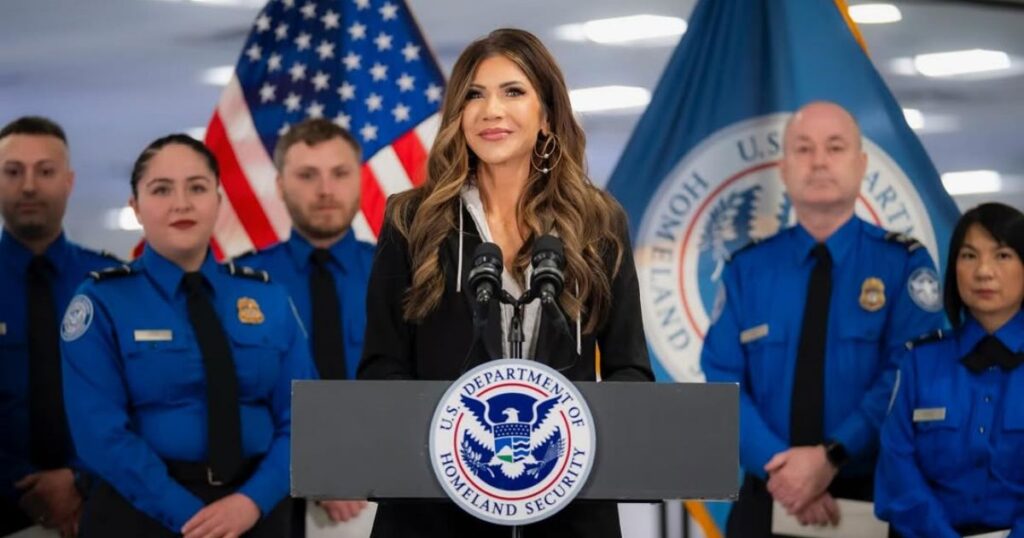
Homeland Security Secretary Kristi Noem said she may have relied on incorrect initial reports when she described Alex Pretti, a Minneapolis ICU nurse who was fatally shot by Border Patrol agents, as a domestic terrorist. This statement came as the Trump administration tried to manage the backlash from two deaths linked to a federal immigration operation in the city.
In an interview Thursday night, Noem explained that the hours following Pretti’s killing were very chaotic. She mentioned that she repeated information given by agents on the scene. “We were getting information from CBP agents and officers who were there,” Noem said per Politico, continuing: “We used the best information we had at the time.”
Noem’s comments were her clearest public retreat from the administration’s initial account of the January 24 shooting, which officials described as a violent confrontation. Video and witness accounts surfaced in the days after the incident. News organizations reported that the footage did not match key aspects of early statements that suggested Pretti posed an imminent lethal threat.
A preliminary government review also contradicted the first public narrative, according to NPR. It reported that an internal CBP death-notification assessment, based on body-camera footage and agency paperwork, did not indicate Pretti attacked officers or threatened them with a weapon, contrary to what senior officials initially claimed. The report noted that an agent yelled that Pretti had a gun before two federal officers fired shots.
The shooting of Pretti, 37, followed the January 7 killing of Renée Good, another U.S. citizen, during federal immigration enforcement in Minneapolis. These two deaths sparked protests, demands for investigations, and increased scrutiny of the administration’s approach in Minnesota.
Noem faced growing political pressure from both parties. Republican Senators Lisa Murkowski of Alaska and Thom Tillis of North Carolina publicly urged Trump to remove Noem, arguing that her handling of the situation made tensions worse. Murkowski told reporters that Noem “has—through her words, and I think in her actions—taken a direction that has not helped the situation.”
While Noem recognized possible inaccuracies, she avoided directly answering whether she should resign. She defended her leadership and described the administration’s response as quick and based on field reports.
As criticism grew, Trump sent border security chief Tom Homan to Minneapolis to oversee operations and messaging. Homan announced Thursday that the administration would create a plan to reduce the federal presence in the state and focus on more targeted operations, such as moving arrests to jail settings instead of street encounters. “More agents in the jail means fewer agents on the street,” Homan said.
The White House also indicated an internal review of operational decisions. Stephen Miller told ABC News that the initial DHS statement depended on reports from CBP on the ground and noted that officials were “evaluating” why a CBP team “may not have been following” guidance about having extra personnel for force protection help separate arrest teams from protesters.
The administration’s shifting stance occurred as Trump and senior allies continued to support the overall enforcement effort, even while adjusting their language about Pretti. News outlets reported that Trump labeled Pretti an “insurrectionist” after footage emerged showing a confrontation with federal agents days before the shooting. Meanwhile, Pretti’s family and attorney argued that the earlier incident did not justify using lethal force.
Noem’s retreat did not answer the central questions surrounding the two killings, which remain under investigation. However, it did highlight the political divide within Trump’s party, with some Republicans calling for accountability while the White House aimed to stabilize operations in Minnesota and minimize the diplomatic and legal fallout from its initial, disputed descriptions of the incident.