



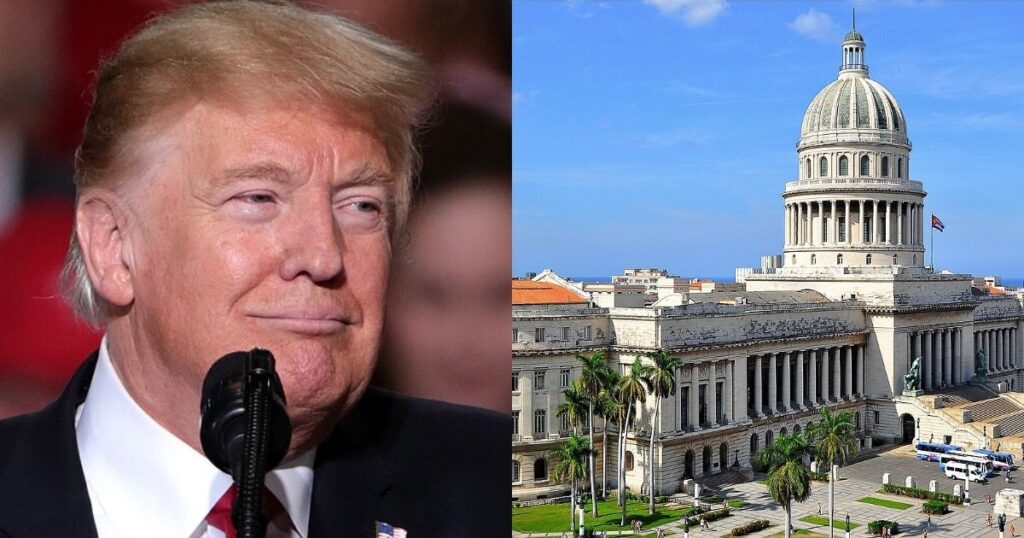
Trump administration officials are developing internal plans to change Cuba’s government by the end of 2026. They are meeting with exile political leaders and civic groups in Washington and Miami to find potential defectors and other leverage points, according to The Wall Street Journal.
The Journal reports that officials see Cuba as economically weak after losing key support. The island is facing deepening shortages and instability. U.S. officials are looking for ways to increase pressure, including steps to limit fuel supplies and to target overseas medical missions that provide hard currency to Havana.
The Journal notes that the administration’s recent operation in Venezuela, which led to President Nicolás Maduro’s removal, has energized this effort. U.S. officials are looking for a similar path in Cuba by identifying insiders willing to negotiate a transition.
Another report, based on the Journal’s findings, indicates that U.S. officials have not finalized a clear plan to overthrow Cuba’s government. Instead, they are trying to outline possible scenarios and find pressure points beyond the island’s economy.
The White House has not publicly confirmed the Journal’s description of the meetings or the end-of-year goal. Administration officials have not provided a detailed public strategy for a post-transition government. The New York Post, summarizing the Journal’s report, stated that the White House had not commented on the findings.
Q: Do you want your Board of Peace to replace the UN?
TRUMP: Well, it might. The UN should have settled every one of the wars I settled. pic.twitter.com/04bh3ReWcj
— Aaron Rupar (@atrupar) January 20, 2026
This effort would represent a significant shift in Trump’s foreign policy compared to his 2024 campaign message. During that campaign, he argued that the United States should reduce foreign entanglements and focus resources at home. The Journal describes the current push as part of a more interventionist approach after Trump returned to office.
Analysts cited by the Journal cautioned that Cuba’s political system and security forces may make any transition more difficult than in Venezuela. They pointed out Cuba’s one-party governance structure and its aggressive suppression of dissent.
The Journal also reported that U.S. officials believe there is a narrow window to create change. The administration aims to increase pressure on Cuba’s leadership while trying to encourage internal divisions.
For decades, U.S.-Cuba relations have vacillated between confrontation and cooperation. Sanctions, travel restrictions, and diplomatic efforts have shifted with each administration. During Trump’s first term, his administration tightened policies after the thaw during the Obama era. The Journal has previously reported that Trump sought to restore a hard-line approach.
The reported planning occurs as Trump officials also push allies on various issues in the Western Hemisphere and challenge European partners on trade and security. This situation is creating diplomatic tension on multiple fronts.
The Journal reported that some Republicans have privately expressed unease about the direction of the policy, warning that an overt push for regime change risks blowback and prolonged instability.
Others inside the administration argue that domestic political costs would be limited, given the island’s unpopularity with key voting blocs. No timeline for congressional notification or authorization has been disclosed, and it remains unclear how far the White House is prepared to go if the effort stalls.


