



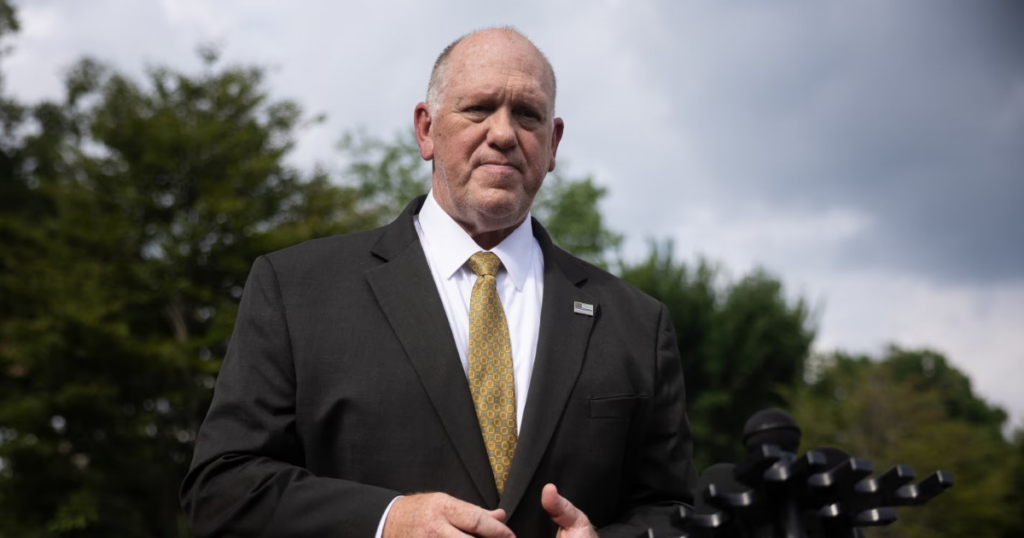
Tom Homan, President Donald Trump’s border security adviser, said Thursday night that he wants the administration to create a database of people arrested during protests related to ICE operations. He believes officials should make their identities known to employers, schools, and neighborhoods.
Homan expressed these views during an interview with Fox News host Laura Ingraham on “The Ingraham Angle.” He made a clear distinction between lawful protest and what he called criminal interference with federal officers.
“These people who want to follow ICE and film ICE, you can protest; you have that right,” Homan said, according to video and transcript from the interview. “But when you cross that line and we’ve proven it, if you interfere, impede, or assault an ICE officer, you will be prosecuted.”
He then outlined a proposal he claims to be “pushing for” within the administration.
“One thing I’m pushing for right now, Laura, we’re going to create a database,” Homan stated. “The people who are arrested for interference, impeding, and assault, we’re going to make them famous. We’re going to show their faces on TV. We’re going to let their employers, neighborhoods, and schools know who these people are.”
Homan suggested that some protesters take time off work to attend demonstrations. He also wants employers to be informed when their employees are arrested in connection with protest activities.
The White House has not yet provided specific details on how such a database would function, which agencies would manage it, what information it would include, or the rules governing public release. Homan presented the proposal as a response to arrests made during clashes tied to immigration enforcement actions.
Civil liberties advocates warn that public “name-and-shame” tactics can restrict speech and association. Legal experts often point out that an arrest does not mean a conviction, which can create problems when personal information is widely shared. Homan’s comments come at a time when immigration enforcement is a national issue, marked by confrontations at operations, public demonstrations, and lawsuits challenging some federal policies.
🚨 BREAKING:
Tom Homan says the Trump admin is building a database of people attacking ICE and plans to broadcast their names and faces publicly.
Then he says they’ll contact employers, schools, and neighborhoods to expose them.
“We’re gonna MAKE ‘EM FAMOUS!”
That’s not law… pic.twitter.com/nrhtABt687
— Brian Allen (@allenanalysis) January 16, 2026
Homan has previously warned that state and local officials could be arrested if they obstruct federal immigration enforcement. In May 2025, Wisconsin Public Radio reported that Democratic Gov. Tony Evers reacted strongly after Homan suggested that officials could be arrested for “impeding” ICE. Reuters and other news outlets have also reported Homan making similar warnings aimed at Democratic officials in other areas.
Homan has also faced public scrutiny over allegations from a past bribery investigation. Reuters reported in September 2025 that the White House affirmed Trump supports Homan after claims that he took $50,000 in cash during an undercover sting—a claim Homan denied. The administration stated there was no evidence of illegal activity. Politico also reported Homan denied accepting $50,000 from undercover agents, asserting the matter was resolved before he took his current position.
Homan’s comments about the “database” quickly spread online and received coverage from various outlets, including The Daily Beast, which described the plan as an attempt to publicly target those arrested during anti-ICE protests.
The Justice Department and the Department of Homeland Security have not published a policy document that outlines a new federal database for arrested ICE protesters. Any system that collects arrest information and shares it outside law enforcement channels could encounter legal and political challenges, especially if it includes individuals who are never charged or are later cleared.
Currently, Homan’s remarks raise important questions: who would qualify for inclusion, whether the administration would release names before a conviction, and what measures would be in place to prevent misidentification and misuse.


