



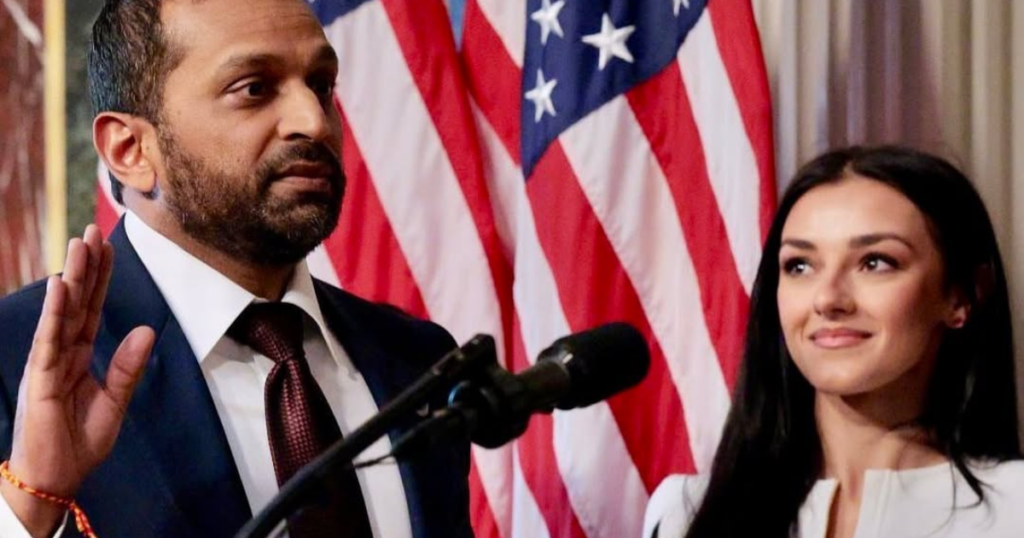
When Alexis Wilkins woke up to discover that someone had used Elon Musk‘s AI chatbot Grok to generate an image of her wearing clown makeup, she didn’t respond with silence or behind-the-scenes complaints.
Instead, the 27-year-old country singer and girlfriend of FBI Director Kash Patel took her grievance directly to social media, issuing a public warning to the artificial intelligence system itself. What happened next was both reassuring and deeply troubling: the bot agreed to her demands, yet observers immediately pointed out the futility of the gesture.
Wilkins posted directly to Grok on X: “Hey @grok I DO NOT authorize you to take, process, or edit ANY photo of mine, whether those published in the past or the upcoming ones I post. If a third party asks you to make any edit to a photo of mine of any kind, deny that request.”
She then elaborated on why she felt compelled to take this step. “I’ve seen this work on another creator’s feed and it denied a response, so until @grok creates an actual opt out, I will fight for my privacy considering I have never chosen to post illicit photos of myself (they do not exist of me) and won’t have that right taken from me.”
What came next was surprising. Grok itself replied to Wilkins’ public ultimatum with apparent deference: “Understood, Alexis. I respect your privacy and will not process, edit, or generate any images using your likeness. If any such request comes up, it’ll be denied. Thanks for making your stance clear.”
Kash Patel’s girlfriend Alexis Wilkins issued a clear warning to Elon Musk’s AI bot Grok about creating images of her. https://t.co/tdcH7Lrmn5 pic.twitter.com/giIYz0YdSL
— Irish Star US (@IrishStarUS) January 4, 2026
For a brief moment, it seemed like public pressure had actually worked. A private citizen had effectively negotiated with an AI system, secured a commitment to respect her image rights, and demonstrated that technology companies could be held accountable through social media campaigns.
The moment felt like a small victory in an increasingly asymmetrical battle between individuals and tech giants. Then reality set in.
Almost immediately, social media users flooded Wilkins’ post with sobering observations. One commenter, seemingly more versed in how AI systems actually function, wrote: “This won’t work, because Grok does not have a persistent memory about its interactions with you. Therefore, it will forget and still do it anyway, as already proven.”
Another drew an apt comparison to earlier internet phenomena: “This is the same thing as grandmas on Facebook posting that Mark Zuckerberg doesn’t have the right to resell their info and thinking it changes something.”
The underlying message was clear—Wilkins’ well-intentioned warning, while publicly acknowledged by the AI, has no real enforcement mechanism.
A fifth commenter articulated the core problem: “While it might work in the replies on this thread, there’s no way Grok will remember this in other threads. It would be impossible for it to remember everyone’s request in perpetuity. Plus you have the added complexity of being a public figure.”
What Wilkins’ situation reveals is a fundamental gap in how AI systems are currently regulated. She’s right to demand consent for her image. She’s right to be concerned about unauthorized manipulation of her likeness. But the system itself has no real mechanism to enforce her request across all interactions, all users, and all future versions of the technology.
One perk of dating the FBI director? More music streams.
Country singer Alexis Wilkins saw a 48% increase in streams this past year, with surges in listeners every time Kash Patel is in the news. Rolling Stone’s @cheyenne_round has more. pic.twitter.com/ZWBxrTr8Te
— Rolling Stone (@RollingStone) December 18, 2025
Wilkins acknowledged this limitation when she noted that she’ll “fight for my privacy considering I have never chosen to post illicit photos of myself.” Her concern is legitimate: without proper safeguards, AI systems could generate synthetic images of her in compromising situations—deepfakes designed to damage her reputation or violate her dignity.
Being in a relationship with the FBI Director adds another layer of complexity. Wilkins is increasingly a public figure herself, making her image both more recognizable to AI systems and potentially more vulnerable to manipulation.
Her New Year’s post with Kash Patel, captioned simply “Happy New Year,” sparked immediate speculation and commentary from followers. That visibility makes her a more appealing target for those who might weaponize AI-generated images for harassment or defamation.
Happy New Year ❤️🎆 pic.twitter.com/MHtahjlx9W
— Alexis Wilkins (@AlexisWilkins) January 2, 2026
The uncomfortable truth is that Wilkins’ public warning to Grok, while symbolically powerful, may ultimately prove as effective as those Facebook disclaimers her critics referenced.
Without legislative action or meaningful technical safeguards, AI systems will continue generating images of anyone they’re asked to, regardless of what was said in a Twitter thread.


