



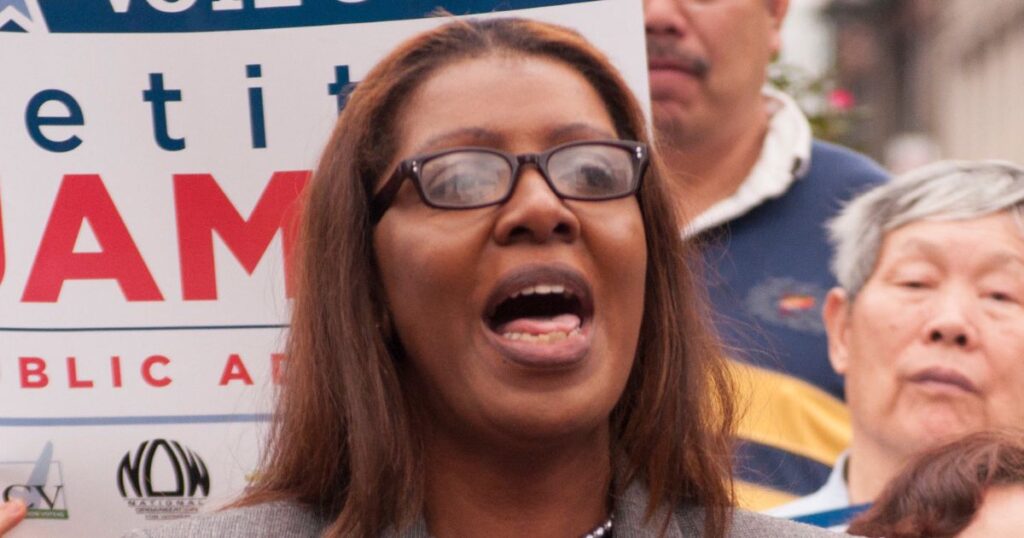
New York Attorney General Letitia James has created a second-term courtroom scorecard against the Trump administration that feels more like routine than a streak.
Throughout 2025, James and groups of Democratic-led states repeatedly convinced federal judges to stop or reverse major moves by the administration. They argued that agencies cannot change spending rules, eliminate programs, or set new conditions without lawful authority and a clear process.
This run began on January 31, 2025, when a federal judge issued a temporary restraining order against a Trump administration policy that sought to pause or block federal grants, loans, and other assistance. This quickly turned into a battle over who controls federal funding.
A follow-up win came on March 6, with a court order preventing the administration from freezing federal funds.
James continued her efforts on May 13, when a court order blocked the dismantling of three federal agencies that support libraries and museums, workers, and minority-owned businesses. On June 23, she won a ruling against cuts to medical research funding. Her office described this case as an illegal, ideology-driven pullback.
On July 1, another judge blocked the administration’s plan to dismantle parts of Health and Human Services. This included mass layoffs and restructuring linked to key public health and safety functions.
Later that summer, James achieved a major victory on tariffs after the U.S. Court of Appeals for the Federal Circuit ruled that the administration’s “emergency” tariffs under the International Emergency Economic Powers Act were illegal.
In September, the winning streak continued with a preliminary injunction that blocked a move intended to cut social services funding for programs like early childhood education, community health services, mental health support, and food banks.
Toward the end of 2025, James scored several big wins impacting basic benefits and state authority. On November 10, she won a court order that temporarily blocked a federal effort to reduce SNAP benefits. On November 18, a federal judge dismissed the DOJ’s lawsuit against New York’s Protect Our Courts Act, which limits civil immigration arrests at courthouses without a judicial warrant. This ruling supported New York’s ability to protect courthouse access from federal immigration enforcement tactics.
On November 21, James secured a summary judgment preventing the elimination of four federal agencies, reinforcing the limits of unilateral dismantling. She went on a winning streak in December as she won a case protecting FEMA’s BRIC disaster resilience program on December 12, obtained a preliminary injunction blocking new HUD conditions on Continuum of Care homelessness funds on December 19, and received a summary judgment that safeguarded school-based youth mental health funding on December 22.
The year’s final entry occurred on December 23, when a federal judge dismissed the DOJ’s challenge to New York’s “Green Light Law.” This law allows undocumented immigrants to obtain driver’s licenses and limits DMV data sharing.
Trump’s feud with James dates back to 2018, when she campaigned on investigating Trump and his businesses, calling him an “illegitimate president.” After taking office, James followed through, launching a civil investigation into the Trump Organization that ultimately led to a landmark fraud ruling in 2024, with a New York judge finding Trump and his company liable for years of inflating asset values to secure favorable loans and insurance.
Trump responded by branding James a “racist” and a “political hack,” while James argued the case was about enforcing the law equally. When he returned to office, she was on top of the list of his political enemies, but he has yet to get revenge with his indictments.


