



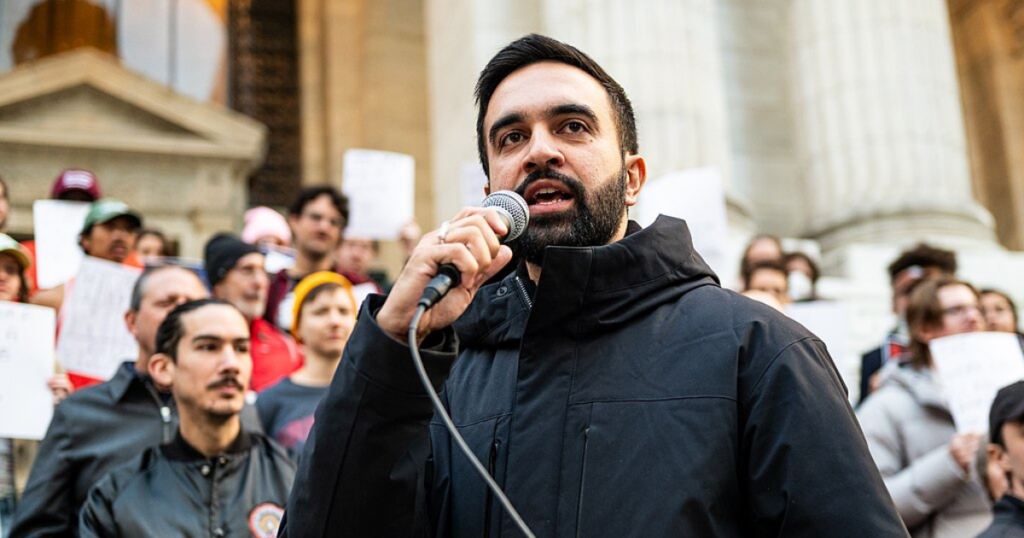
In a stunning and controversial first act as New York City mayor, Zohran Mamdani wasted no time dismantling key pillars of his predecessor’s legacy. On Thursday, just hours after taking the oath of office, Mamdani issued a sweeping executive order revoking the city’s adoption of the International Holocaust Remembrance Alliance (IHRA) definition of antisemitism.
The move, part of a broader nullification of executive orders issued by former Mayor Eric Adams since his September 2024 indictment, also scrapped anti-boycott measures protecting Israel, signaling a sharp leftward pivot for the nation’s largest city.
The decision has sent shockwaves through New York’s Jewish community and beyond. The IHRA definition, widely adopted by governments and institutions globally, classifies certain forms of criticism against Israel—such as denying the Jewish people’s right to self-determination or claiming the state’s existence is a racist endeavor—as antisemitic.
For Mamdani, a vocal anti-Zionist and longtime supporter of the Boycott, Divestment, and Sanctions (BDS) movement, the definition posed a direct ideological conflict. His revocation effectively removes the city’s official framework for identifying and addressing antisemitism that masks itself as political critique.
New Year, New Mayor. pic.twitter.com/cG1es1jQQc
— Mayor Zohran Kwame Mamdani (@NYCMayor) January 1, 2026
“We must distinguish between antisemitism and criticism of the Israeli government,” Mamdani stated last week, responding to concerns about his administration’s stance. “The ADL’s report oftentimes ignores this distinction, and in doing so, it draws attention away from the very real crisis of antisemitism.”
Yet, the practical implications of his order are immediate and far-reaching. By nullifying Adams’s directive, Mamdani has also voided an order that opposed the campaign to boycott Israel, potentially opening the door for city contracts with entities that boycott Israel—though existing New York City law against discrimination based on national origin remains a hurdle.
Additionally, the order revoked NYPD instructions to reassess protest protocols outside houses of worship, a measure Adams implemented following aggressive demonstrations at a synagogue. While Mamdani’s team noted that subsequent guidance would address police conduct, the initial rollback has fueled anxiety among Jewish leaders.
Despite the overhaul, Mamdani stopped short of abolishing the Office to Combat Antisemitism, which Adams established in May. Executive Order No. 2 confirms the office’s continued existence, though its leadership and mandate remain in limbo. Rabbi Moshe Davis, the office’s director and a close Adams aide, admitted on Wednesday that he had received no communication from the new administration regarding his future. “I currently have the job until I hear otherwise,” Davis said. “I’m ready to serve.”
🚨 BREAKING: Mayor Mamdani says that he will keep open the recently-created Mayor’s Office to Combat Antisemitism.
“That is an issue that we take very seriously, and as part of the commitment that we've made to Jewish New Yorkers, to not only protect them, but to celebrate…” pic.twitter.com/jjub9FKU4z
— Jacob N. Kornbluh (@jacobkornbluh) January 1, 2026
The uncertainty surrounding the office’s direction is compounded by a recent Anti-Defamation League (ADL) report revealing that over 20% of Mamdani’s transition appointees have ties to anti-Zionist groups. One appointee was cited for comparing Zionists to Nazis, a rhetoric that critics fear could now find a foothold in city governance.
Mamdani’s team frames the mass revocation as a necessary “fresh start” to distance the new administration from the corruption-clouded final months of Adams’s tenure. Adams’s indictment, though later dismissed amid political maneuvering involving the Trump Justice Department, served as the cutoff date for Mamdani’s purge.
However, for many New Yorkers, the ideological targeting of pro-Israel measures suggests this is less about cleaning house and more about setting a radical new agenda—one that fundamentally redefines how the city navigates the fraught intersection of free speech, discrimination, and Jewish identity.


