



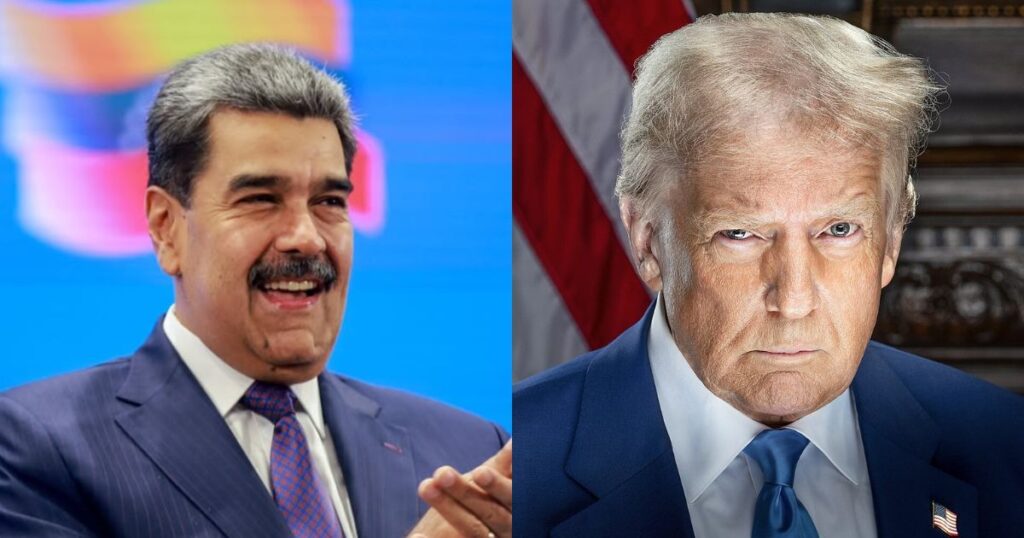
Venezuelan President Nicolás Maduro is expressing interest in reaching an agreement with President Donald Trump. He is offering cooperation on drug trafficking and inviting U.S. investment in Venezuela’s oil sector, even as Washington increases military pressure and tightens restrictions on his government.
According to Fox News, in a pre-recorded interview with Spanish journalist Ignacio Ramonet, which aired on Venezuelan state television, Maduro stated that Venezuela is “ready” to discuss a drug-trafficking agreement with the United States. He encouraged both sides to “start talking seriously, with data in hand.”
He sweetened the offer by highlighting the country’s main asset, oil. “If they want oil, Venezuela is ready for U.S. investment, like with Chevron, whenever they want it, wherever they want it, and however they want it,” Maduro stated. Chevron is currently the only major U.S. oil company exporting Venezuelan crude to the United States.
It was recorded on New Year’s Eve, the same day the U.S. military announced a “kinetic strike” that reportedly killed five people on two vessels linked to designated terrorist organizations involved in drug trafficking. Maduro avoided discussing the specific strike during the interview, even as he expressed his openness to talks with Washington on drug trafficking.
This offer comes after months of rising U.S. activity at sea. Reports indicate that at least 114 people have died since the U.S. began bombing suspected drug-trafficking boats in the Caribbean and Eastern Pacific in early September. U.S. officials have hinted at a possible expansion of the campaign, possibly including ground operations.
Trump just went full mafioso on Maduro.
“He can do whatever he wants, it’s alright, whatever he wants to do… If he plays tough, it’ll be the last time he’s ever able to play tough.”
Trump holds all the cards, and he’s not afraid to use them.
We just witnessed it with Iran. pic.twitter.com/hVfeqbGc3B
— Clandestine (@WarClandestine) December 22, 2025
The strikes have been controversial as the Trump admin has claimed fentanyl is coming from Venezuela when it is produced primarily in Mexico and reaches the US almost exclusively by land through its southern border.
Trump confirmed that a strike last week targeted what he described as a Venezuelan port used for drug trafficking, though he did not clarify if it was conducted by the U.S. military or another group.
Maduro described this pressure as an attempt to force political change in Caracas and gain access to Venezuela’s resources.
He claimed that the U.S. wants “to impose themselves through threats, intimidation, and force,” while promoting what he saw as a regime-change agenda tied to oil. Maduro has emphasized that the U.S. actions are aimed at Venezuela’s natural resources and that he is open to “serious” discussions that could include U.S. oil investment and cooperation on drug trafficking.
Washington’s stance has tightened further in recent weeks, with Trump ordering a complete blockade of oil tankers entering or leaving Venezuela and designating Maduro’s regime as a foreign terrorist organization. U.S. authorities have also seized ships carrying sanctioned oil.
This sets the stage for Maduro’s message that he is ready to negotiate and make a deal with his most valuable asset. It also suggests that he is crumbling under the pressure from Trump, and the move is motivated by desperation.
Whether this is a genuine opportunity or a tactical move is yet to be seen.