



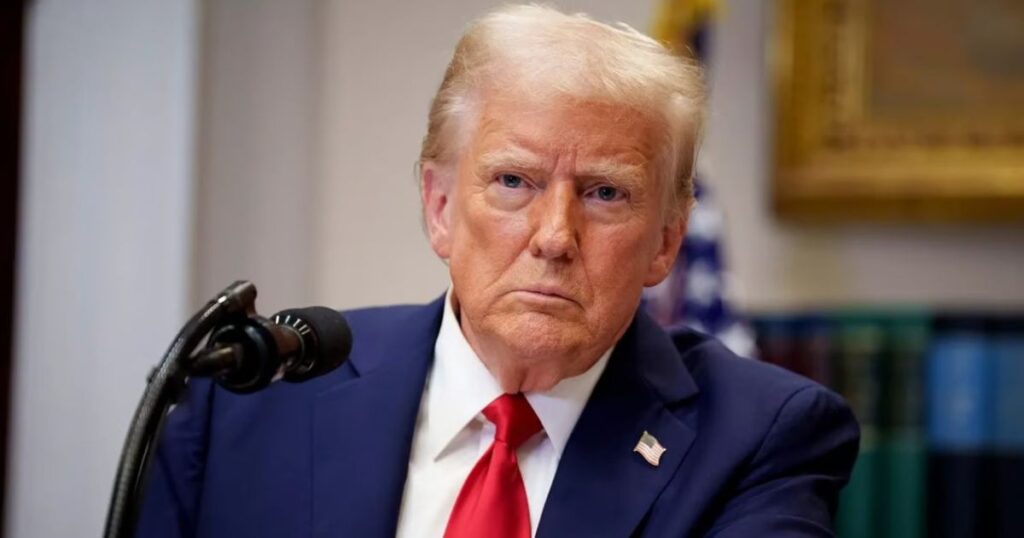
President Donald Trump issued a clear warning early Friday, writing on his Truth Social platform that the United States was “locked and loaded and ready to go” if Iran’s security forces continued to violently suppress protesters.
The potential escalation in the U.S.-Iran conflict comes after significant unrest in the Islamic Republic.
The post came in response to days of protests in cities throughout Iran, where people have taken to the streets due to severe economic hardship, including a collapsing currency and rampant inflation. At least seven people have been reported killed in clashes with security forces, according to Associated Press.
Trump’s message specifically stated that if Iranian authorities “shoot and violently kill peaceful protesters,” the U.S. would intervene to “come to their rescue.” This was the first time Trump publicly suggested possible American intervention on behalf of Iranian demonstrators, though he did not provide details on what that involvement might look like.
The president’s last night’s social media posting and use of aggressive language have previously led to foreign policy decisions.
Trump’s warning fits with his already tough stance toward Iran in 2025. In June last year, Trump signed off on three Air Force and Navy attacks on three of Iran’s nuclear facilities under the code name, Operation Midnight Hammer. Trump said the strikes “completely and totally obliterated” Iran’s key nuclear enrichment facilities; however, this statement has since been called into question.
Despite Trump’s claims that those strikes had “obliterated” Iran’s nuclear capabilities, international monitoring agencies reported only a temporary disruption to Iran’s uranium enrichment efforts.
Iranian officials have fired off a warning of their own at the U.S. A senior security figure warned that any U.S. intervention in Iran’s internal unrest would cross a national security “red line” and could destabilize the wider region. Tehran has also accused the U.S. and Israel of stirring up unrest and interference, threats that reflect longstanding tensions between the governments.
Street protests in Iran 🇮🇷 are getting serious, triggered by collapse of the currency and inflation, but also with political slogans in the traditionally important bazaar of Teheran. pic.twitter.com/eWY0yWMHwP
— Carl Bildt (@carlbildt) January 2, 2026
The protests have been described as the largest since the nationwide demonstrations in 2022 that followed the death in custody of Mahsa Amini, which sparked international outrage and months of turmoil. This year’s demonstrations began amid economic strain but have seen chants expand beyond immediate financial concerns to broader demands and anti-government sentiment.
U.S. officials beyond the president have also expressed their views. According to reports on the protest movement, the U.S. Department of State showed support for Iranian protesters and urged Tehran to respect human rights and avoid violently silencing demonstrators. The U.S. Ambassador to the United Nations reinforced that support, highlighting the demonstrators’ desire for freedom and signaling ongoing American diplomatic engagement.
The recent escalation is yet more proof of the fragile relationship between the United States and Iran.
As protests continue, the death toll will likely be a crucial factor in whether Trump’s rhetoric leads to military action. If his past actions in military readiness are anything to go by, the president won’t hesitate to strike Iran.