



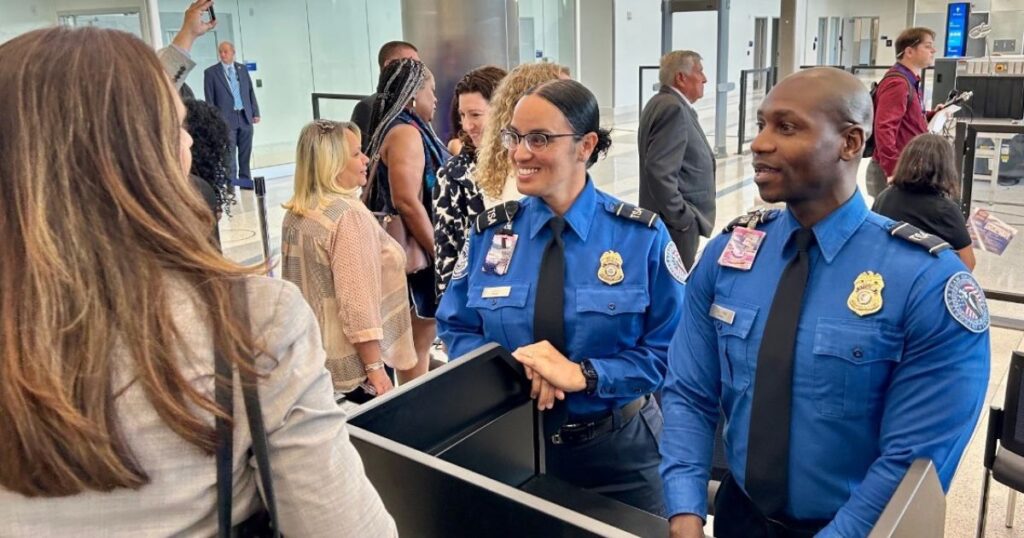
The Transportation Security Administration has a new rule for travelers that will take effect in 2026. As 2026 approaches, the TSA could see a surge in air travel, which may lead to new policies. For example, some airlines may require TSA to check the size of carry-on bags at the departure gate. If a bag exceeds the allowed dimensions, travelers may be charged an additional fee.
Earlier this year, the Trump administration strongly promoted the REAL ID policy. Starting in 2026, a new policy will allow TSA to issue a “temporary ID” for $45 to American travelers who do not have a REAL ID or other valid identification for flying. While some of these policies will be implemented directly by TSA, others will be issued by specific airlines. Overall, 2026 is expected to be a significant year for U.S. travelers.
🎒 Packing Your Luggage? ✈️
✅ You can bring:
• Hand luggage up to 7 kg (56 × 36 × 23 cm)
• One personal item, either a slimline laptop bag or a handbag, but not both.
🔋 Important: Power banks and spare batteries to be packed in your hand luggage.
Before you fly, check… pic.twitter.com/XNYafCG8mn
— FlySafair (@FlySafair) December 23, 2025
In particular, airlines are getting stricter with carry-on bags. Most travelers are aware that, except for Southwest Airlines, most airlines allow similar size and dimension limits for carry-ons. The new policy could also include checking the dimensions of wheels, handles, and bulging pockets. A new weight limit will also be introduced for carry-on bags. Starting in 2026, most airlines will allow 15–22 pounds on international routes. Passengers should review their airline’s policy before departure.
In addition, the size and dimensions of carry-on bags will be checked at the departure gate, and the excess fee may increase from $35 to $65. Some airlines, like Air Canada, will introduce a new policy for basic-fare passengers. They will have to check in larger carry-ons that do not qualify as personal items. This free standard will apply only to flights within Canada and to or from the U.S., Mexico, Central America, and the Caribbean. For all other international routes, basic-fare passengers must check in their larger carry-on bags.
View this post on Instagram
Meanwhile, the Transportation Security Administration will introduce another significant policy as part of its TSA ConfirmID program. Starting February 1, 2026, travelers without a REAL ID or other valid identification can apply for a $45 TSA temporary ID. This temporary ID serves as an alternative verification that allows passengers to fly and is valid for up to 10 days. However, the rule has been criticized as too costly.
With all these new policies, 2026 is expected to bring a major shift in air travel in the United States.