



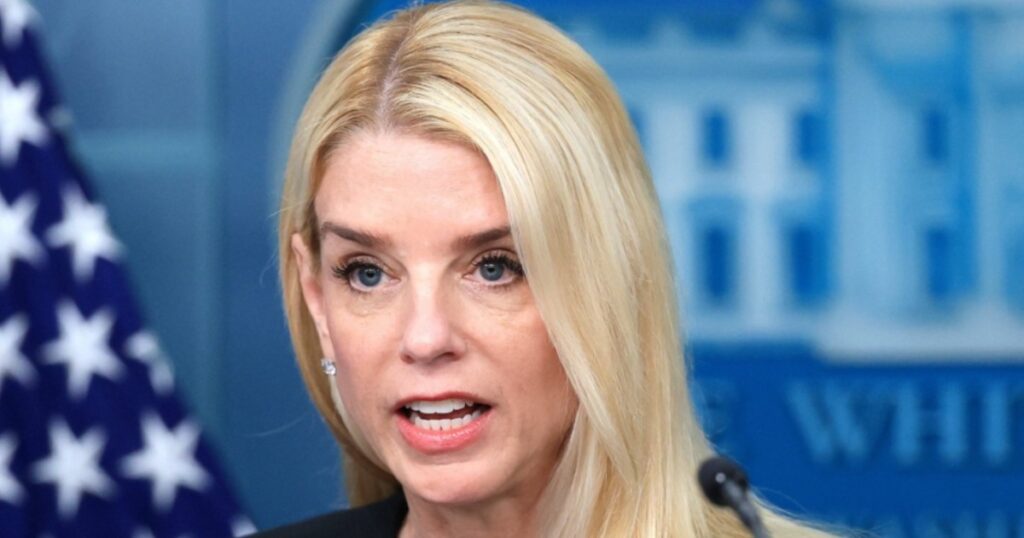
Attorney General Pam Bondi is facing increasing accusations of an illegal cover-up. This follows the Justice Department’s quiet removal of a set of photographs from its Epstein files website. This move raised immediate questions from Congress and intensified scrutiny of how Bondi’s DOJ is managing a new disclosure law.
The removals came to light over the weekend when at least 16 files disappeared from the DOJ’s public webpage for Epstein-related records, less than a day after they had been posted. The missing files included photographs from a 2019 law-enforcement search of Jeffrey Epstein’s Manhattan home.
One image showed a drawer filled with multiple photographs, including at least one of President Donald Trump. Reports indicated that several removed photos depicted Epstein’s third-floor massage room, a place often mentioned in federal investigative records. While some photos of that room remained public, others disappeared.
House Oversight Committee Democrats pressed the Justice Department for answers. They asked whether the Trump-related image had been removed and why the files were no longer available. According to reports, the DOJ did not respond to questions about the removals and offered no notification or explanation to the public.
In a post shared on X, quoting Deputy Attorney General Todd Blanche, the department said, “Photos and other materials will continue being reviewed and redacted consistent with the law in an abundance of caution as we receive additional information.” Blanche also stated that the department had released materials “under the Epstein Files Transparency Act” and that more disclosures would follow as reviews continued, mentioning protections for victims.
In separate comments, Blanche claimed the removals had “nothing to do” with Trump and were made at the request of victims’ advocacy groups to ensure privacy and proper redactions. He expected that the images could be restored after review.
This dispute has placed Bondi, the administration’s top law-enforcement official, at the center of a growing controversy over whether the DOJ is following the law as intended. The Epstein Files Transparency Act mandates the release of unclassified Epstein-related materials in the government’s possession and allows for limited redactions, including protections for victims. Critics argue that the law does not permit materials to be published and later pulled back without a clear explanation.
The removals also come as the DOJ’s releases related to Epstein face criticism from various sources regarding the extent of what has been disclosed. News reports characterized the initial document collection as extensive but heavily redacted. Victims and advocates claimed the rollout was inconsistent and sometimes harmful. This release has also raised concerns about whether the department’s redaction process consistently protects survivors, especially after a separate incident where a survivor alleged her name appeared without proper redaction in publicly released materials.
Republican Rep. Thomas Massie has also questioned the department’s compliance. He argued that the DOJ did not follow the law’s protocol for providing internal communications about omissions and decisions linked to the Epstein files. Instead, Congress received a letter claiming privilege.
The weekend’s photo removals have become a controversy as they involved materials already posted publicly and include images related to Trump as well as several photos tied to Epstein’s home.
Bondi has not made a public statement that directly addresses the removed photographs. The Justice Department has not provided a detailed account of which files were removed, which remain under review, or when any withdrawn materials will be restored. The department’s public messaging has emphasized continued review and victim protections as new information comes in.