



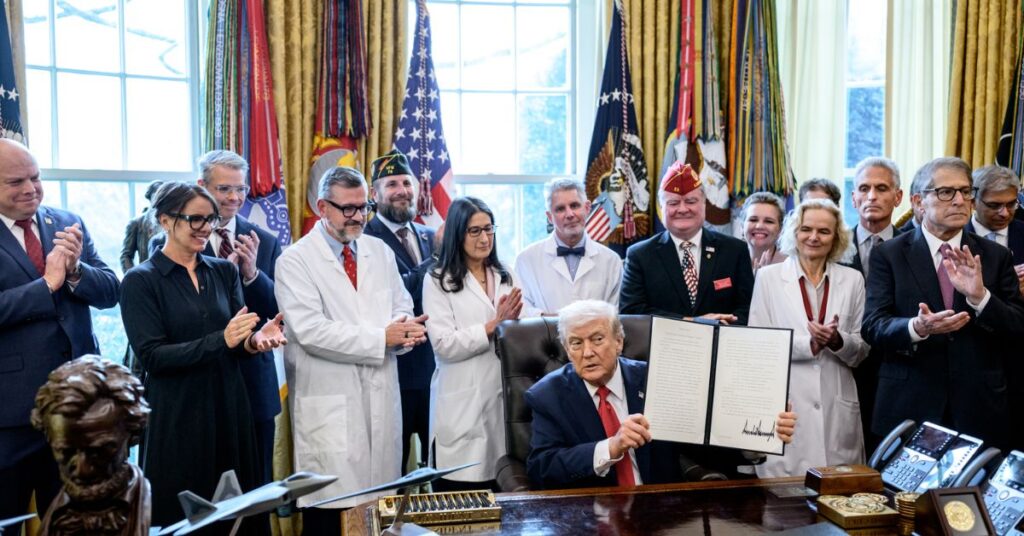
President Donald Trump took a major step this week toward reshaping federal drug policy by signing an executive order expanding access to marijuana and cannabidiol products, marking one of the most significant shifts in federal cannabis policy in decades. The move reflects evolving public opinion, growing scientific research, and pressure from patients and states that have long pushed for federal rules to catch up with reality.
The executive order by Donald Trump directs federal agencies to reclassify marijuana out of its long-standing categorization as a Schedule I drug—a designation reserved for substances considered to have no accepted medical use—and move it to Schedule III, a classification for drugs with recognized medical applications and a lower potential for abuse. That marijuana usage shift officially acknowledges the therapeutic value of cannabis and removes a major barrier that has limited research, medical access, and broader acceptance of marijuana-based treatments.
President Trump signs executive order rescheduling marijuana from a Schedule 1 to a Schedule 3 controlled substance pic.twitter.com/GaIRreRT60
— CSPAN (@cspan) December 18, 2025
Donald Trump framed the decision as rooted in everyday common sense and patient need. “We have people begging for me to do this,” he said at the signing ceremony, referencing constituents who have reached out about how cannabis and CBD have helped them or their loved ones. Trump added, “This is something that I think is right for the country, and it’s time for science and compassion to lead us.”
In addition to rescheduling marijuana, the Donald Trump order expands federal support for research into both cannabis and hemp-derived CBD, a non-intoxicating cannabinoid widely used for wellness and symptom relief. Federal agencies are tasked with streamlining approvals for clinical trials and encouraging scientists to explore how cannabis-based therapies can be used safely and effectively. Supporters say this could pave the way for clearer dosing standards, improved product safety, and new treatments backed by rigorous science.
One of the most notable elements of the new Donald Trump policy is a pilot program enabling Medicare to reimburse medically recommended CBD treatments. The Trump marijuana initiative is expected to focus on seniors coping with chronic pain, cancer-related symptoms, and other debilitating conditions.
While the Donald Trump order does not legalize recreational marijuana nationwide, it brings federal policy closer to the reality on the ground: most states now allow medical marijuana in some form, and many have also legalized adult recreational use. The mismatch between state laws and federal restrictions has created uncertainty for patients, doctors, researchers, and businesses. Rescheduling marijuana removes a major obstacle that has prevented banks, insurers, and scientists from fully engaging with the sector.
Industry leaders and patient advocates welcomed the Trump marijuana announcement as long overdue. Many said it signals federal recognition of cannabis’s legitimate place in modern medicine and public health. They argue that decades of strict federal controls slowed research and left patients without reliable guidance on products they were already using.
Critics, including some GOP lawmakers and public health groups, cautioned that loosening federal marijuana restrictions could blur the lines between medical and recreational use. They stressed the need for education and safeguards to prevent misuse. Supporters countered that thoughtful regulation and research, not prohibition, offer the best path to safety and accountability.
The move by President Donald Trump also carries broader implications for criminal justice and public health. Although the executive order does not eliminate existing penalties, advocates believe it signals a shift away from punitive approaches and toward policies informed by science and compassion. Many see it as a milestone reflecting a change in how the federal government views cannabis, from a taboo substance to a legitimate therapeutic option.
As federal agencies begin implementing the Donald Trump marijuana changes and preparing to support expanded research and Medicare programs, many Americans see the order as a turning point. For patients who have waited years for federal acknowledgment, for researchers eager to study cannabis’s full potential, and for families seeking safer alternatives for pain relief, the announcement represents more than a policy update. It marks a cultural and scientific reset that brings federal law closer to modern medicine and lived experience.