



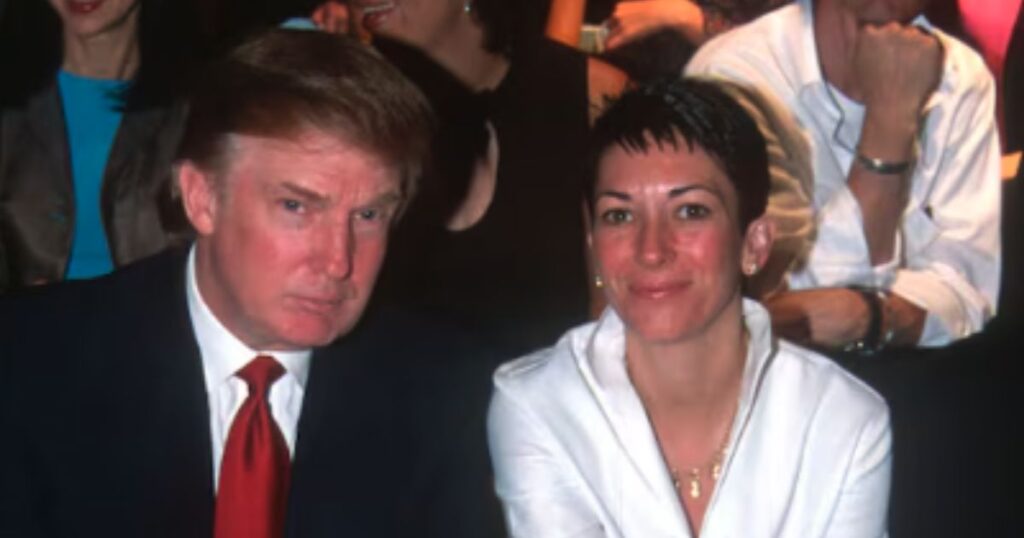
President Donald Trump was not informed that the Justice Department planned to transfer Ghislaine Maxwell to a minimum-security prison after investigators interviewed her. When he found out, he was furious, according to a new account from his chief of staff.
In a series of interviews published by Vanity Fair, White House chief of staff Susie Wiles offered a rare look at how decisions were made during Trump’s second term in the West Wing. The conversations took place over the past year with author Chris Whipple and covered topics like Trump’s motives, personality, and the Jeffrey Epstein files.
One notable quote came up when they spoke about Maxwell, the convicted sex trafficker and Epstein associate who has become a fixation for parts of Trump’s base. Wiles mentioned that Deputy Attorney General Todd Blanche, Trump’s former lawyer now in a top post, drove the decision to interview Maxwell. However, she noted that the president had no idea Maxwell would be transferred to a minimum-security facility after the interview.
“The president was ticked,” Wiles recalled. “The president was mighty unhappy. I don’t know why they moved her. Neither does the president.”
The Epstein scandal has consistently stirred controversy for the White House, which has tried to maintain control after months of turbulence surrounding the Epstein-related document rollout and the ensuing conspiracy theories. In the interviews, Wiles also criticized Attorney General Pam Bondi and Vice President JD Vance. She described tensions that, until now, had mostly been discussed as rumors.
Maxwell’s transfer raised conspiracy theories, as many questioned why Trump’s administration would move her to an easy prison after her conviction for serious crimes. Wiles’ comments suggest a White House that lacked clear awareness of a move that quickly generated headlines and questions. Reporters and lawmakers are now seeking answers about why the transfer occurred, who authorized it, and whether it was routine.
Wiles claimed she had looked over the Epstein files herself and stated they contained no incriminating information about Trump or former President Bill Clinton. This claim is likely to intensify the ongoing debate over what remains sealed, what has been released, and what various groups believe is still hidden.
One prominent political reporter described the interviews as “extraordinarily unguarded,” and the reaction was swift. The White House acted quickly to manage the fallout and defend Wiles, even as her quotes spread rapidly across social media and cable news.
After the story was published, Wiles publicly argued that her comments were presented in a way that misrepresented her intentions. She stated that the piece was a “disingenuously framed hit piece” and mentioned that key context was omitted, along with positive comments about the team and the president.
The press office also supported her, and in a statement, White House press secretary Karoline Leavitt called Wiles the president’s most loyal adviser. She said the administration stood united behind her leadership.
Still, the details Wiles shared are not the kind that fade quickly. An angry president, a DOJ decision he claims not to have known about, and a case that intersects sex trafficking, elite scandal, and political paranoia create a situation that tends to linger.


