



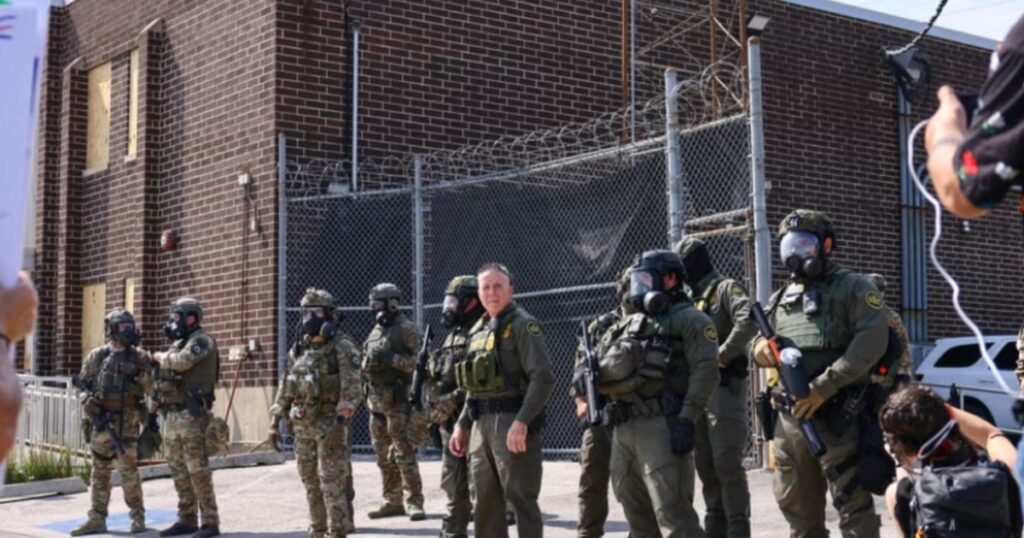
A federal judge in Chicago laid out a stark assessment of life inside the ICE immigration facility in the suburb of Broadview, Illinois. For him, the stories from detainees weren’t just uncomfortable; they were deeply troubling, using strong language like “disturbing,” “disgusting,” and “unconstitutional”. “Sleeping shoulder to shoulder next to filthy toilets that are overflowing, surrounded by human waste,” he said, was simply “unacceptable.”
The judge, Robert W. Gettleman of the U.S. District Court, spent roughly six hours listening to detailed, emotional testimony about the facility operated by ICE, which has become a focal point of the administration’s crackdown under Operation Midway Blitz. He warned that the building appears to have drifted far beyond its intended use as a short-term holding site. “It has really become a prison,” he said.
The lawsuit at the heart of the hearing alleges detainees were held far longer than policy allows, deprived of adequate beds, blankets, showers and hygiene supplies, and denied timely access to legal counsel while authorities allegedly pressured them into signing deportation-related paperwork. One witness said water “tasted like sewer” and that he spent days crammed in a cell among 150 other men with no place to lie down.
ICE, through the Department of Homeland Security, pushed back forcefully. In a statement on X, the agency said: “All detainees are provided with 3 meals a day, water, and have access to phones to communicate with their family members and lawyers. No one is denied access to proper medical care… Any claims there are sub-prime conditions at the Broadview ICE facility are FALSE.”
At the same time, DOJ counsel acknowledged that the Broadview site was “operating beyond its normal capacity” and described the situation as a “learning curve.” But the judge was blunt: the testimony he heard “contradicted pretty thoroughly” the government’s declarations.
Among those who spoke at the hearing: a woman who addressed the court remotely from Honduras after she’d been deported, a construction worker in the U.S. for decades who described being told to sleep in a chair or on the cement floor, and attorneys who said they were unable to speak with their clients even as officials asked them to sign complicated legal forms without full explanation. In one case, a detainee said he was told he would be held until he signed a voluntary departure form that would effectively bar him from re-entering the U.S. for 10 years.
Gettleman made clear he wasn’t simply annoyed; he considered the record “disturbing,” “unnecessarily cruel,” and possibly unconstitutional. While he did not rule on the spot on the plaintiffs’ request for a temporary restraining order directing the government to improve conditions, he left no doubt what he believed: there is enough evidence for real judicial intervention. He said he’ll issue an order following review of videos and photos from inside the facility.
For its part, ICE said the facility was always meant to hold detainees only briefly, traditionally up to 12 hours, but has been used for far longer under the current enforcement surge. Asked about showers and beds, the agency pointed to staffing and design limitations, though critics note the change in the facility’s use was foreseeable.
In his closing remarks, the judge wrapped up with this warning: while he recognized the government’s right to enforce immigration laws, he stressed that right does not include mistreating detainees. “If the conditions are unconstitutional, so be it,” he said. And for the men and women who testified, and the families waiting at home, tomorrow’s ruling may carry more weight than anything else to date.