



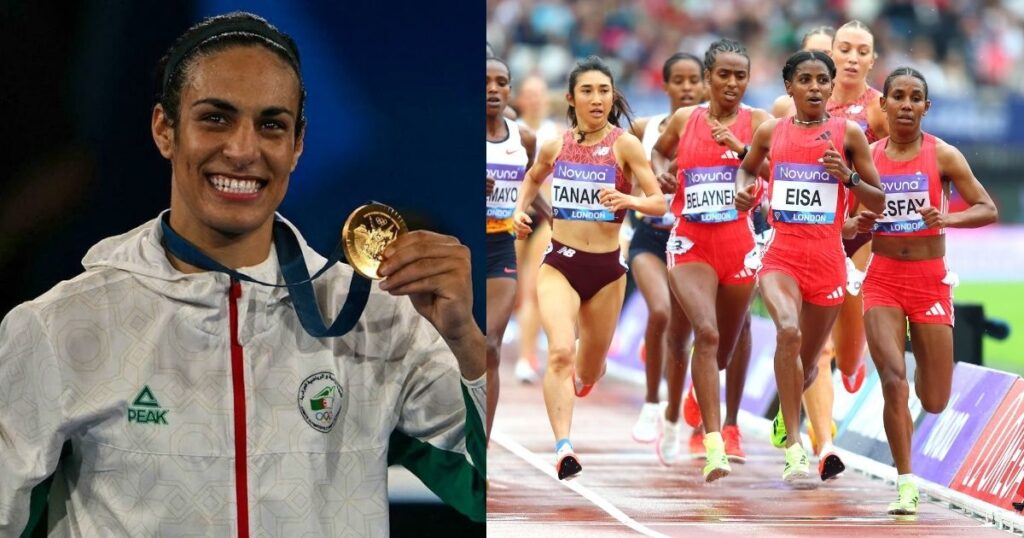
Imane Khelif won gold at the 2024 Paris Olympics in women’s boxing. However, her victory has triggered sweeping changes in rules and regulations of international sports organizations due to the result of her genetic testing results to determine her sex. Among these is the process to verify athletes’ eligibility.
Khelif came under scrutiny after a leaked medical report that suggested that she has an XY chromosome pattern. However, she has firmly maintained her identity as a woman.
In response to the report and the uproar that followed, World Boxing has introduced a mandatory genetic testing for sex determination. This testing would be done via PCR to confirm the presence of the Y chromosome.
World Boxing is the new IOC‑recognized governing body for the sport and the first body to implement such rules.
Athletes who either have a Y chromosome or have evidence of male androgenization due to DSD (Difference of Sexual Development) will now be required to compete in the male category.
Khelif has been officially barred from competing in any further competitions until she agrees to take the test and submit the result to the sporting body.
The initial announcement, named Khelif specifically, prompted backlash as expected. However, World Boxing later issued an apology for publicly naming an individual. This behavior showed why it is necessary to show sensitivity in the present times.
BREAKING: @WorldAthletics has approved new regulations for sex screening that will require SRY gene testing in the female category.
Check out our animated video to see how the process will work 🎥@FondOfBeetles, @BrowngaGreg, @runthinkwrite, @Scienceofsport pic.twitter.com/kvtbtcVU2o
— Zachary Elliott (@zaelefty) July 30, 2025
The controversy has had the expected effects across other sports. After World Boxing, World Athletics joined in. World Athletics is the governing body for track and field. It also announced that beginning September 1, 2025, all female athletes competing in the World Athletics Champions must undergo a one-time genetic testing for the SRY gene. This gene indicates biological sex and is verified via a cheek swab or a blood sample.
World Athletics President Sebastian Coe has defended the rule. He has stated that this step is necessary to preserve fairness. Biological sex must take precedence over gender identity in elite female competition.
The policy allows for limited exceptions, such as known DSD athletes with testosterone levels below set limits. However, it still places the test as a new standard for verification.
Athletes will be eligible to compete in the female category for world ranking competitions such as the World Championships only if they clear a one-time gene test in a bid to protect the integrity of women’s sport, World Athletics said on Wednesday. https://t.co/vrhSw0FfOH
— Yahoo News (@YahooNews) July 30, 2025
The Imane Khelif controversy began at the 2023 IBA World Championships. She was disqualified from the championships after a Russian-run IBA alleged that she failed unspecified gender eligibility tests.
The International Olympic Committee (IOC) quickly dismissed that disqualification as “sudden and arbitrary.” They also clarified that Khelif and Taiwan’s Lin Yu‑ting were eligible under its own rules.
However, once the gender test results were leaked, it reignited global debate over eligibility, fairness, and science-based regulations in women’s sports. The genetic testing results claimed that Khelif has XY chromosomes and high testosterone, therefore making her unqualified for women’s sports.
Olympic boxer Imane Khelif’s leaked lab results offer new evidence about her biological sex https://t.co/zvdjBpnial pic.twitter.com/uOwxBbzSUJ
— New York Post (@nypost) June 2, 2025
Despite those leaks, neither the IOC nor credible scientific bodies have yet verified the claims. Khelif has been denying being intersex or transgender. She has been asserting that she was born, raised, and lives as a woman.
Her position is backed by advocacy groups including GLAAD and interACT. They emphasize that criticism rooted in physical appearance or assumptions can create an unsafe environment for players who do not fit the stereotypical model of male and female. This also creates unsafe transphobic and intersex-targeted narratives.
🚨HAPPENING NOW🚨
The International Boxing Association is holding a press conference in Paris to address the issues surrounding Algerian boxer Imane Khelif and Taiwanese boxer Lin Yu-Ting.
Highlights so far:
*Both boxers were initially subjected to a chromosomal test by an… pic.twitter.com/659lwIWjLu
— REDUXX (@ReduxxMag) August 5, 2024
The evolving landscape reflects a bigger issue in sport. That is how to manage gender diversity, competitive fairness, and athlete dignity.
Other sport federations worldwide now face the challenge of drawing lines between biological verification and identity inclusion.