



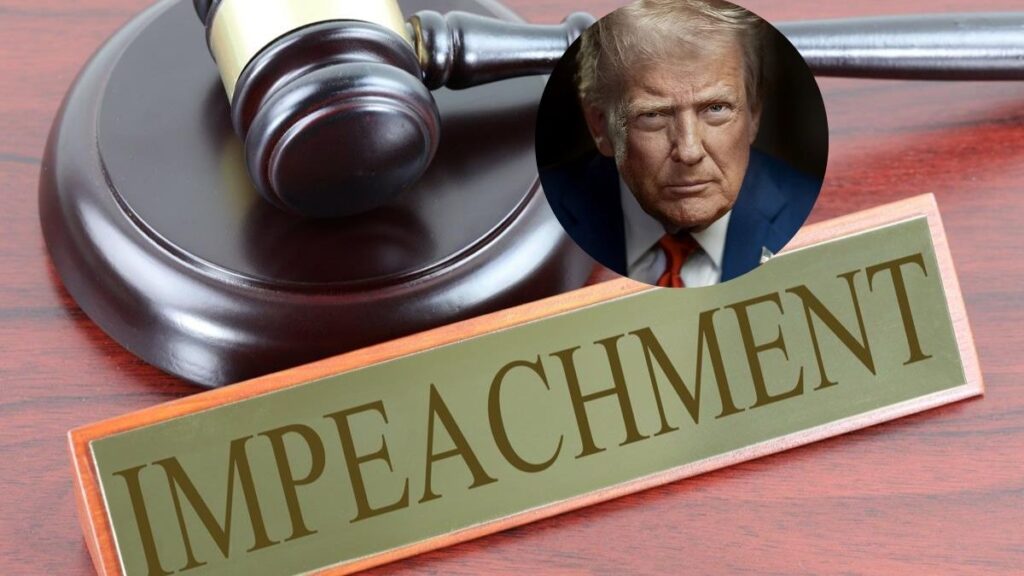
The second term of President Donald Trump has been marked by public speculation about his health and criticism of several of his political decisions.
Trump’s statements about Iran regarding the opening of the Strait of Hormuz led to criticism from lawmakers in both parties, and some political commentators have questioned his ability to carry out presidential duties.
As questions about Trump’s health and his political decisions continue, some Americans have asked whether a president can be removed from office and what would happen next.
View this post on Instagram
There are two constitutional methods for removing a president from office: the 25th Amendment and impeachment. The 25th Amendment was ratified in 1967 following the assassination of President John F. Kennedy, who was succeeded by President Lyndon B. Johnson.
The 25th Amendment outlines procedures for a president’s resignation, death, temporary disability, or inability to perform the duties of office.
While it has never been invoked against a President’s will, Section 4 of the 25th Amendment makes it possible. High-level officials like the Vice President and a majority of the Cabinet or another body designated by Congress can remove a President from office without consent if the President is “unable to discharge the powers and duties of his office.”
Congress has never established that alternative body, and legal scholars continue to debate the role of Cabinet members in the process.
In case higher officials decide to take the help of Section 4 of the 25th Amendment, they must send a written declaration to the Senate’s president pro tempore and the speaker of the House. At that point, the Vice President becomes the acting President. However, the President can challenge this move by writing to Congress and claiming that no incapacity on their part exists.
However, the President claiming that he is capable does not bring him back to the office. Following the President’s claims, Congress then gets four days to decide whether it disagrees with the President. In case they do, Congress must meet within 48 hours, and then it has 21 days to decide the issue. During that period, the vice president stays in charge.
To remove the President from office, following this procedure, two-thirds of both the House and Senate must agree. If Congress cannot reach that mark, the President regains his authority and title and gets back to the office.
View this post on Instagram
Besides invoking Section 4 of the 25th Amendment, impeachment is another method used to remove a president from office for charges of “treason, bribery, or other high crimes and misdemeanors.”
Impeachment addresses alleged misconduct or abuse of power rather than questions about a president’s physical or mental ability.
Impeachment starts in the House of Representatives. If the House approves articles of impeachment, the case then moves to the Senate. The Senate holds the trial and decides whether to remove the president.
This decision also requires a two-thirds vote. The Senate can also vote to bar the person from holding future federal office, but only after conviction and removal. More than 85 congressional Democrats have called for Trump’s impeachment, but nothing of that sort has been finalized yet.