


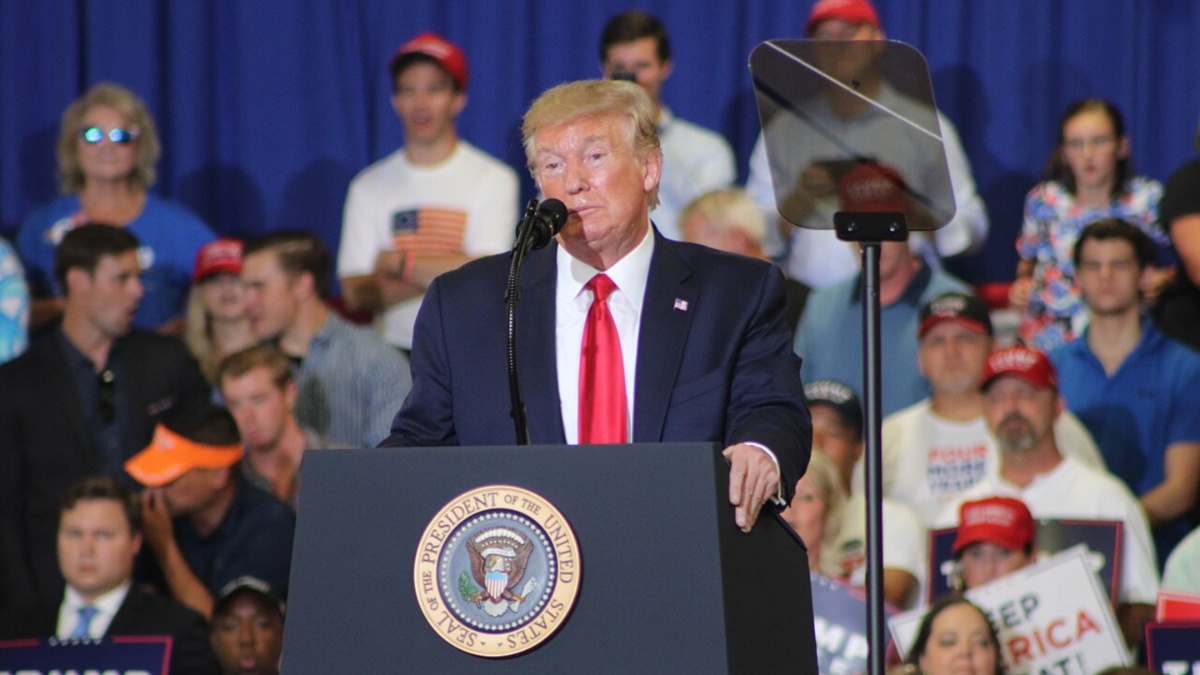
President Donald Trump said he was “very happy” with current oil prices. In an interview with Fox Business, he suggested the economic impact of higher fuel costs on Americans was acceptable if it prevented Iran from getting a nuclear weapon.
When asked directly about the high oil prices, he responded: “If you told me that we were going to be at only $92 a barrel, I would have been very surprised. I’m very happy, and it’s going to come dropping down very big as soon as it’s over,” he said.
This comes as the White House continues to defend the economic fallout from the U.S. war with Tehran.
Trump’s latest comments reflect a stronger version of what he said earlier in the conflict. He told Reuters he wasn’t worried about rising gasoline prices. He stated, “if they rise, they rise,” because the military effort mattered more than “having gasoline prices go up a little bit.”
Donald Trump on high oil prices:
“I was willing to accept that to stop a nuclear weapon… it was certainly worthwhile. I’m very happy.”
Too early to call it markets, supply, and the Strait of Hormuz will decide whether this holds or backfires. #WashingtonEye pic.twitter.com/UEQiLZMR8P
— Washington Eye (@washington_EY) April 15, 2026
By Wednesday, with benchmark crude prices still high, Trump said he was willing to accept the trade-off and was glad prices were not higher. Reuters reported Brent crude at about $95 a barrel and U.S. West Texas Intermediate at about $91.91 on April 15.
These comments came as the administration tried to reassure voters and markets that the energy shock would not last. Treasury Secretary Scott Bessent said Wednesday that the U.S. economy would slow this quarter due to the Iran war but remained strong and would recover.
He also noted that oil prices did not seem to be pushing up inflation expectations. A day earlier, Bessent argued that “a small bit of economic pain for a few weeks” was worth reducing the risk of a nuclear-armed Iran.
However, this message may be harder to sell to households already facing higher pump prices. The Associated Press reported that U.S. consumer prices rose 3.3% in March compared to a year earlier, increasing from 2.4% in February.
The monthly spike of 0.9% was the largest in nearly four years. AP also noted that gas prices averaged $4.15 a gallon nationwide last week, up from $2.98 the day before the war began. Wholesale energy prices also jumped 8.5% in March.
“China is very happy that I am permanently opening the Strait of Hormuz. I am doing it for them, also – And the World. This situation will never happen again. They have agreed not to send weapons to Iran…” – President Donald J. Trump pic.twitter.com/g2LbmMJS5a
— The White House (@WhiteHouse) April 15, 2026
The war’s impact on energy markets is mainly due to disruptions around the Strait of Hormuz, a critical oil shipping route. Reuters reported Wednesday that about 20% of global oil and liquefied natural gas shipments had been affected as transit through the strait dropped to a fraction of prewar levels.
The U.S. has also blocked shipping out of Iranian ports, adding more pressure to already tight energy supplies.
Trump has paired his acceptance of higher prices with claims that the war may soon end. Reuters reported that he said the world would see “an amazing two days ahead,” while The Associated Press noted he argued the conflict was “very close to over.”
Despite this, no final settlement has been announced, and ongoing disruptions in shipping and fuel markets have kept the political risks alive for a president who promised lower energy costs throughout his campaigns.
For now, Trump is betting that voters will tolerate higher gasoline prices as part of a national security goal. Whether this argument holds may depend more on how long Americans see prices above $4 at service stations than on crude prices themselves.