


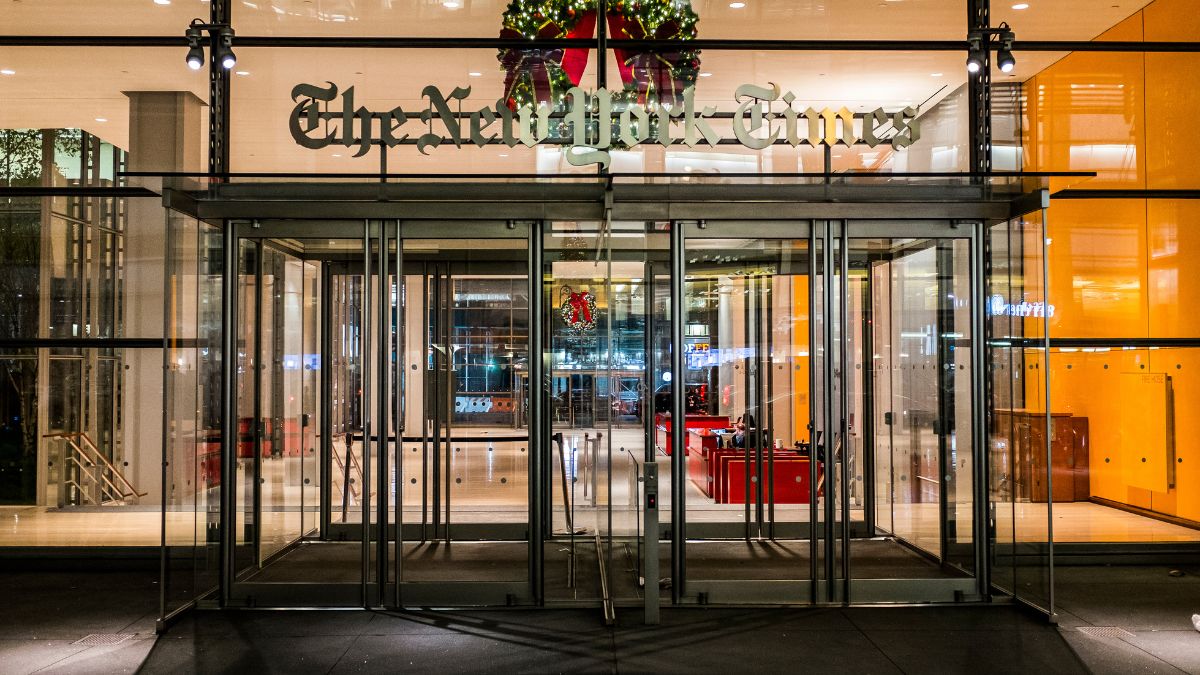
Are workplace diversity policies really diverse? A recent federal discrimination lawsuit against The New York Times (NYT) has reignited a heated national debate over workplace diversity policies.
The Equal Employment Opportunity Commission filed the lawsuit this week. It accused the NYT of allegedly discriminating against a white male editor during the promotion process for the deputy real estate editor role in 2025. The case was filed under Title VII of the 1964 Civil Rights Act, which prohibits employment discrimination based on s-x, race, national origin, or religion.
According to The Independent UK, the agency claimed that the white male editor was passed over for promotion in favor of a less-qualified woman. This allegedly happened as the company wanted to pursue diversity targets inside its newsroom leadership.
The unidentified employee has worked as an editor with the NYT since 2014. He was mostly a staff editor on the international desk and had some prior experience working on real estate stories.
The lawsuit alleged that despite his experience, he was excluded from the final round of interviews for the deputy real estate editor role.
The EEOC claimed that three women and one Black candidate advanced instead.
The woman who was ultimately appointed as the deputy real estate editor “did not have experience with real estate journalism.” But, “as a multiracial female, this candidate matched the race and/or s-x characteristics NYT sought to increase in its leadership.”
Meanwhile, the NYT has labeled the lawsuit politically motivated and said it would defend the publication “vigorously.”
In February 2021, the newspaper introduced a “Call to Action” diversity plan that aimed at increasing Black and Latino leadership representation by 50 percent before 2025.
The lawsuit claims that the NYT has already achieved that goal by 2022, yet continued to emphasize diversity hiring goals. In 2024, 68 percent of leadership roles at the organization were held by white employees and people of color accounted for 29 percent. This was a report that the EEOC used to prove its point in the lawsuit.
NYT spokeswoman Danielle Rhoades Ha also addressed the issue, saying the agency “deviated from standard practices in highly unusual ways.” She added:
“The allegation centers on a single personnel decision for one of over 100 deputy positions across the newsroom, yet the EEOC’s filing makes sweeping claims that ignore the facts to fit a predetermined narrative.”
“Neither race nor gender played a role in this decision – we hired the most qualified candidate, and she is an excellent editor.”
EEOC Chair Andrea Lucas also defended the lawsuit and released a statement:
No one is above the law — including ‘elite’ institutions. There is no such thing as ‘reverse discrimination’; all race or sex discrimination is equally unlawful, according to long-established civil rights principles.
No matter the size or power of the employer, the EEOC under my leadership will not pull punches in ensuring evenhanded, colorblind enforcement of Title VII to protect America’s workers, including white males.
The EEOC is alleging in a lawsuit that the New York Times failed to promote a white man because of DEI-related sex and race discrimination https://t.co/DLQhGXSiqn
— WSJ Politics (@WSJPolitics) May 6, 2026
The case has become critically important given the growing scrutiny around diversity, equity, and inclusion initiatives across the United States under President Donald Trump’s administration.
Lucas has become one of the most outspoken critics of corporate diversity programs in recent times. She previously encouraged white male employees to come forward and reveal if they ever felt discriminated against in the workplace.