Italian schools evacuate as bomb threats also reach Scotland
Prime Minister Giorgia Meloni said there was no indication of concrete danger and called a meeting of ministers.
Emailed bomb threats prompted evacuations at about 300 Italian schools Wednesday, authorities said, and reached hundreds more in Scotland, Northern Ireland and the Republic of Ireland, where police treated them as hoaxes. This is a developing story and will be updated.
Police Scotland said the email reached at least 470 schools in Scotland and came from outside the UK, and officers immediately assessed the warnings as hoaxes. The Police Service of Northern Ireland likewise said the message came from outside the UK and treated it as a hoax after hundreds of schools received it. Irish police assessed the threat as not credible and advised against evacuations.
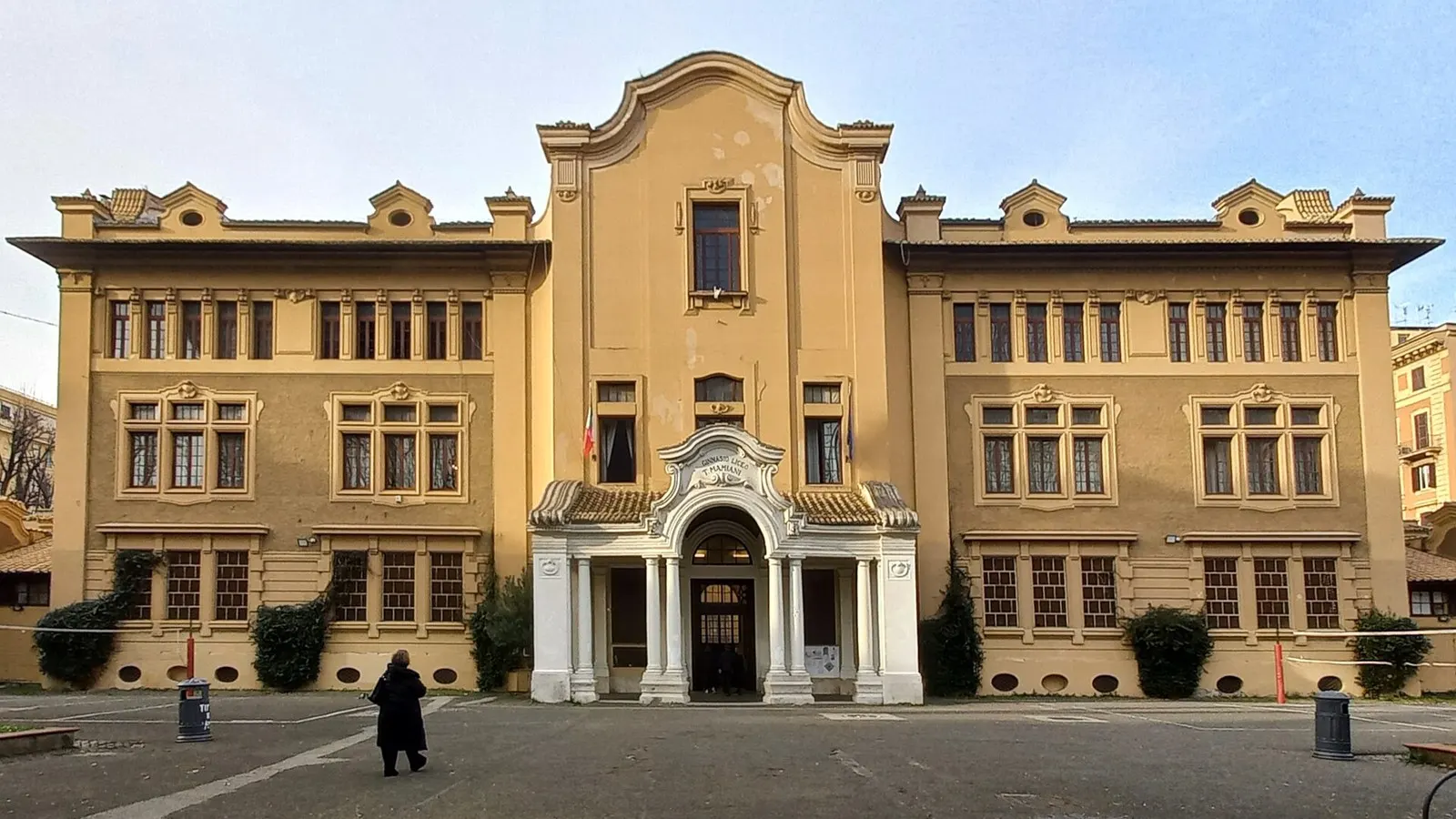
At Rome's Mamiani high school, students rushed into the streets, believing the alarm was the recess bell. Only outside did they learn about the bomb threat.
It was not immediately clear who sent the emails or whether the sender was state-backed. The number of schools receiving the email in the Republic of Ireland was also unknown.
Italian schools respond
Education Minister Giuseppe Valditara said the emails were presumed hoaxes. He expected the number of Italian schools that received them to exceed the 300 known on Wednesday morning.
"Following a nationwide bomb alert, we wish to inform you that all students have been taken to a safe area and remain under the supervision of teaching staff," one Rome school told parents through a messaging app.
"My daughter Dafne started crying because the kids did not understand what was happening, and she was still shaken when I picked her up," said Nensi Bego, a parent at Rome's Mazzini middle school.
Prime Minister Giorgia Meloni said there was no indication of concrete danger to Italian schools and that the threats appeared intended for "generating alarm and concern." She said investigations were underway, while police and other public bodies monitored the situation.
The email bore the signature "Mikhail Andropov, leader of the Vilayat of Misoginistan," France 24 reported, citing Reuters. Italian media including LaPresse said the message also threatened Meloni.
Defence Minister Guido Crosetto called the threats "part of a strategy that is quite clear by now: to spread fear and create anxiety." But he said foreign states or hostile groups are not always responsible for such threats, which can also come from attention-seekers.
Scottish councils report evacuations
Police Scotland said the emails' contents alone did not require schools to evacuate or children to stay away from education. Most local authorities contacted by BBC Scotland said schools were operating normally, though some pupils were evacuated, including at Queensferry High School in Edinburgh, where they were sent home.
Specialist cyber crime officers are investigating the messages' source.
A similar message reached schools across Scotland on Oct. 19, when more than 300 calls were made to police. Stormont education minister Paul Givan said a hoax threat sent to schools in Northern Ireland and Scotland the previous month was Islamist and signed off "Allahu Akbar."
The purported author had also taken responsibility for emailed bomb threats to newsrooms in Ireland and Bulgaria on Nov. 6, CNBC reported, citing Reuters. Italian Foreign Minister Antonio Tajani said on Nov. 7 that his personal data had been leaked to the dark web, and Meloni blamed pro-Russian hackers.
Earlier this month, before Wednesday's school threats, The Irish Times reported that many security analysts saw the incidents as part of a suspected Russian hybrid warfare pattern intended to destabilize countries supporting Ukraine. The newspaper said the difficulty of establishing responsibility is characteristic of such practices. Hybrid warfare uses tactics including cyberattacks, sabotage and disinformation to destabilize adversaries without starting open military conflict.
Anna Kruglova, who lectures on terrorism at the University of Salford, told The Irish Times earlier this month that terrorist or extremist groups probably were not behind the campaign. "It's probably coming from someone pretending to be a member of a terrorist group or extremist group to make it look scarier and more disruptive," she said.
"With current technologies, it could be anyone at all," Kruglova said. She said an earlier threat against an Aer Lingus flight used the name of the Russian group Male State, suggesting "an intention to attribute it specifically to Russia."
Some European officials suspect Russia may be directing a campaign to disrupt daily life in European countries that support Ukraine, NBC News reported. Russia denies responsibility and accuses the West of conducting a smear campaign.
Meloni said she had called a meeting of ministers for later Wednesday.
Sources
- CNBC: Hundreds of schools in Italy, UK evacuated over 'hoax' bomb threats
- France 24: Wave of hoax bomb threats sent to schools in UK, Ireland and Italy
- NBC News: Hoax bomb alerts sent to schools in Italy, U.K. and Ireland in latest disruption
- BBC News: Schools across Scotland targeted by fresh hoax bomb threats
- AP News: Some 300 Italian schools evacuated due to bomb threats
- The Independent: Hundreds of schools across UK targeted by bomb hoax
- The Irish Times: Who is behind the wave of bomb threats in Ireland and Europe?
- Newsweek: Hundreds of schools across Europe evacuated over bomb threats