

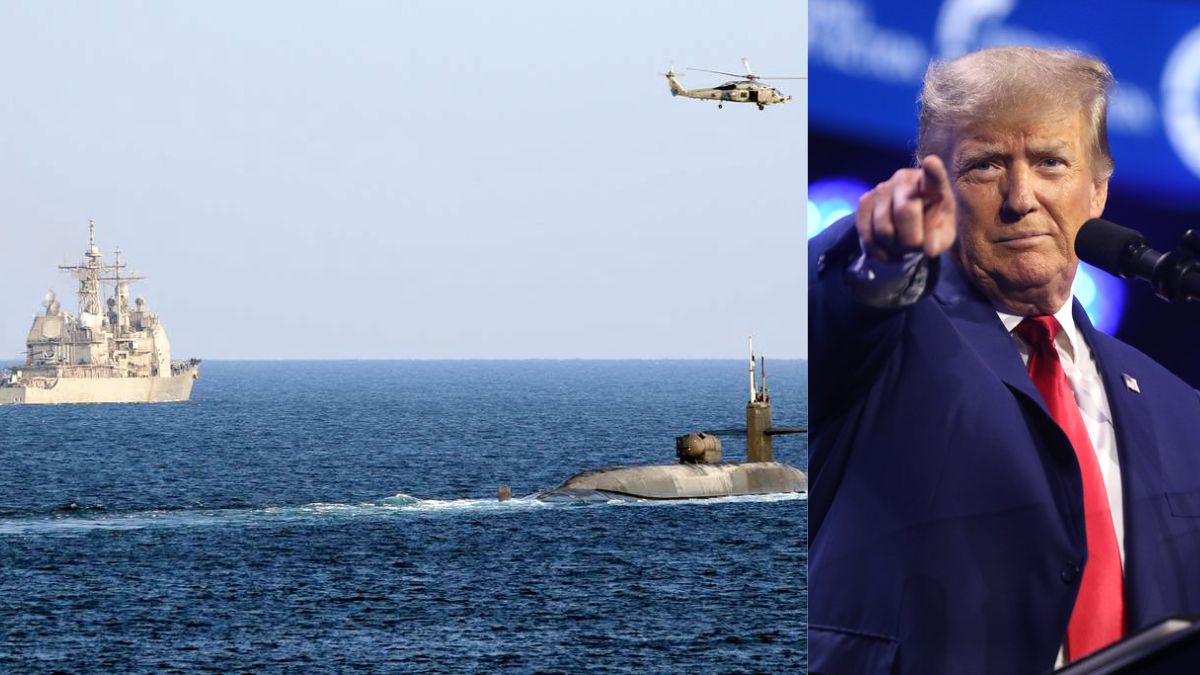
Donald Trump has new plans to tackle the diplomatic issues with Iran amidst Operation Epic Fury. Trump is launching another initiative to address the crisis in the Strait of Hormuz. He announced the U.S. will begin assisting ships stranded there on Monday.
In a post on Truth Social, Trump stated that, “for the benefit of Iran, the Middle East, and the United States,” the U.S. had informed certain countries without naming them that it would ensure their vessels could safely pass through restricted waters and continue their operations.
“For the good of Iran, the Middle East, and the United States, we have told these countries that we will guide their ships safely out of these restricted waterways so they can freely get on with their business,” he wrote without naming the countries.
View this post on Instagram
About 20,000 sailors have been stranded in the Gulf since the conflict began, raising concerns about supplies and the mental and physical well-being of those serving beyond capacity.
“Many of these ships are running low on food and other essentials for large crews to stay on board in a healthy and sanitary manner,” the Republican leader said.
According to Al Jazeera, Donald Trump also announced he was launching the campaign called Operation Freedom at the request of countries whose vessels are stranded in the strait, whom he called “neutral and innocent bystanders.”
The 79-year-old further warned that any deliberate hindrance will have to be dealt with forcefully. The announcement came after Iran restricted maritime traffic through the corridor and the United States imposed a naval blockade on Iranian ports.
According to the BBC, Tehran blocked one of the world’s busiest waterways, a key route for oil shipments to countries including China and India, on Feb. 28, following U.S.-Israel attacks on Iran under Operation Epic Fury.
The Strait of Hormuz, located between Oman and Iran, connects the Persian Gulf to the Gulf of Oman and the Arabian Sea. The waterway is deep and wide enough for the world’s largest crude oil tankers to move swiftly. Reports show that in 2025, about 20 million barrels of oil and oil products passed through the chokepoint daily.
As Iran’s currency, the rial, has dropped to a new low against the U.S. dollar, the country has faced severe economic challenges and damage to its infrastructure.
One serious incident included a strike on a girls’ school in Minab, where Iranian authorities report at least 175 children were killed on the first day of the airstrikes.
After the back-and-forth strikes that caused significant tensions across the Middle East, President JD Vance delivered brief updates from Islamabad, Pakistan. He announced negotiations with Iran had failed. The 41-year-old called it “bad news” as he announced that Iran had rejected U.S. terms following 21 hours of negotiations.
Since the deadly war entered its 62nd day as of May 1, Trump has defended the blockade and urged Tehran to “just give up” as concerns grow around the Strait of Hormuz. He also suggested airstrikes on Iran could resume, citing alleged nuclear ambitions and ongoing diplomatic tensions.
Iran proposed a 14-point plan that included demands that the United States withdraw forces from near the Iranian border, end its naval blockade, halt hostilities, including Israel’s military actions in Lebanon, and finalize an agreement within 30 days.
View this post on Instagram
The proposal also called for a complete end to the war rather than temporary ceasefires, complicating negotiations. On Saturday, Trump confirmed receipt of the proposal, stating on Truth Social that he would review it but was doubtful, while hinting at Iran’s strained relations with the U.S. in the past.
When asked whether military strikes on Iran could resume, Trump said it remained a possibility if Iran “misbehaves” or takes hostile actions. “If they misbehave, if they do something bad,” he said. “But right now, we’ll see.”