DNC sets 12 presidential debates with first dark-money pledge requirement
The schedule starts in June 2027, and candidates must pledge to denounce dark money spending to qualify.
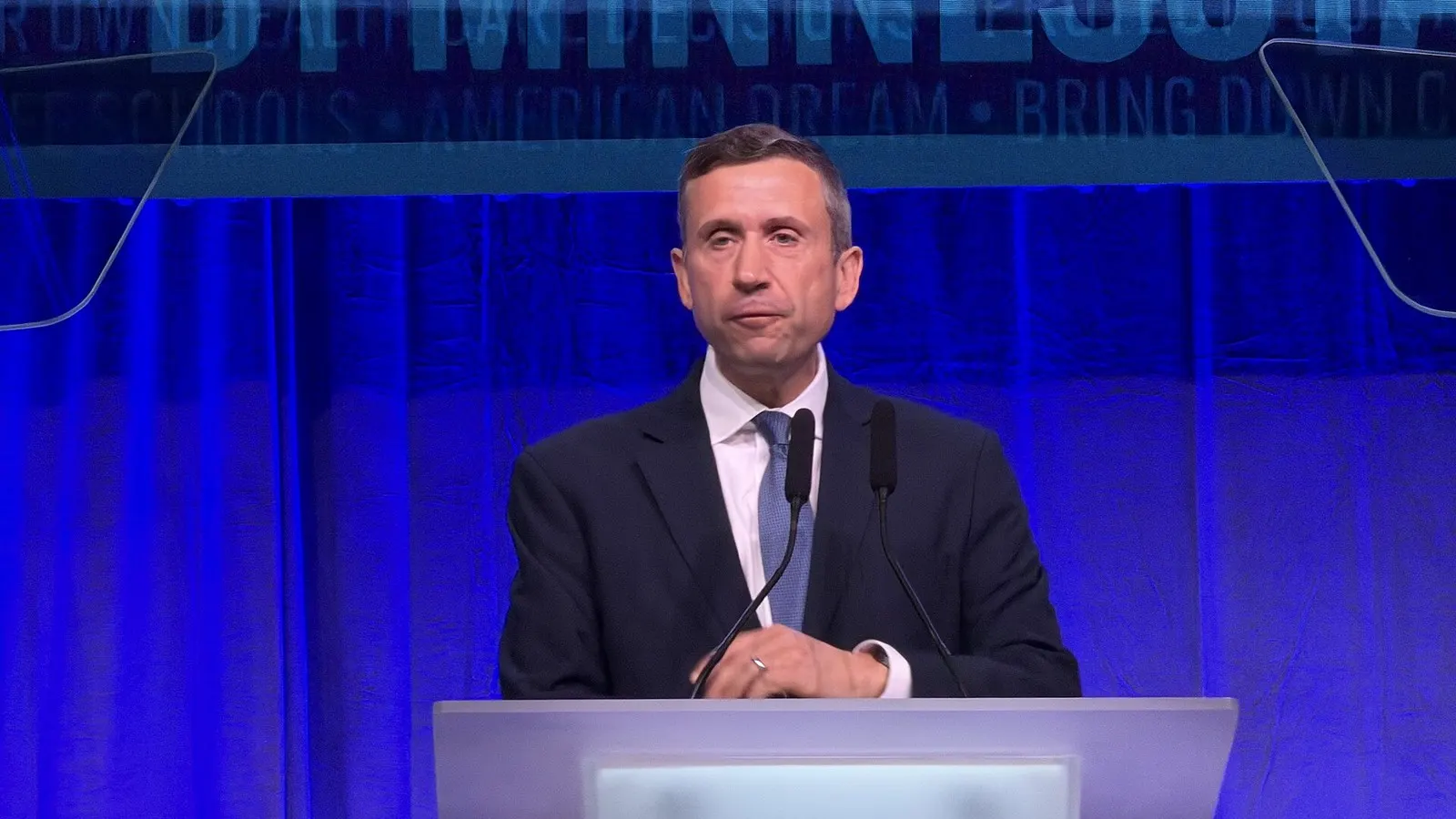
The Democratic National Committee announced Monday it will hold 12 presidential primary debates for 2028, beginning in June 2027, with candidates required to pledge to disavow dark money to qualify.
The party expects a crowded field, and the pledge will be a first for debate qualification, a requirement DNC Chairman Ken Martin has advocated.
The schedule calls for five debates in 2027 and seven in 2028, ending in March 2028. The DNC said it "reserves the right to adjust the schedule as necessary."
"Democrats are on offense after our historic victories in the midterms, and the DNC is keeping our foot on the gas as we head into the 2028 cycle," Martin said.
Rules for outside spending
To reach the stage, candidates must "sign and follow the DNC’s Fair Campaign Practices Pledge committing to denounce dark money spending in our primary in order to qualify for debate participation," the committee said.
Martin brought a proposal to DNC members in August 2025 to examine limits on corporate and dark-money spending in the presidential primary.
Candidates must also disavow any super PACs or dark-money groups that run ads backing them or attacking their opponents, Axios reported. The DNC plans to track those disavowals on its website, along with any complaints alleging that candidates are not following the rules.
The DNC said neither rule covers the 2028 general election or groups attacking Republicans that do not support a particular Democrat.
A DNC official told Axios that progressive senators Bernie Sanders and Elizabeth Warren support the change, as do more moderate Democrats including Representative Jason Crow and former DNC chair Jaime Harrison.
A person close to Martin told Axios the party wants to build on its midterm message opposing dark money and what the person called corruption by Elon Musk and other ultra-wealthy special interests. That message resonated across the ideological spectrum, the person said, while government corruption was a top concern for midterm voters, according to The Associated Press.
Axios said it was unclear whether the change would have a substantive effect or be symbolic, noting that most likely Democratic candidates had been expected to rely on super PACs. The groups cannot legally coordinate directly with candidates, but they can still spend to help candidates who disavow them.
Midterms and the field
Democrats took control of both the House and Senate in this month’s midterms. They have won at least 258 House seats, giving them their largest House majority since 1992, according to an Associated Press tally.
The party has no clear 2028 frontrunner. No major candidate has launched a campaign to succeed Republican President Donald Trump, who is term-limited.
Last week, allies of former Vice President Kamala Harris formed a committee urging her to run, the Los Angeles Times reported. Since the election, committees have also formed to encourage Representatives Ro Khanna and Alexandria Ocasio-Cortez and former Transportation Secretary Pete Buttigieg to enter the race.
"It does feel like the shadow primary is underway," said Jim Demers, a veteran Democratic strategist in New Hampshire.
Debate qualification
The DNC said its qualifying criteria will resemble those from 2020, when a large field took part in a dozen debates. Candidates will need to meet polling and grassroots fundraising requirements.
If necessary, participation will be limited to 20 qualifying candidates per debate across two nights. The early debates could take place over consecutive nights.
Minyon Moore, the DNC’s senior adviser for debates, and Executive Director Roger Lau will lead the planning committee, whose members include staff and advisers from past Democratic presidential campaigns. Moore said she is committed to a process that "sets our nominee up for success in the general election."
Earlier this year, the DNC reduced its list of potential 2028 convention hosts to Boston, Denver and Philadelphia.
The DNC said it will announce in January 2027 the locations, times and media partners for the first two debates, as well as the precise ways candidates can qualify.
Sources
- The Guardian: Democrats reveal details for 2028 presidential primary following midterm victories – US politics live
- The Independent: DNC unveils 12-debate schedule and strict ‘dark money’ rule for 2028 race
- The Hill: Democrats plan 12 presidential debates, with first in June
- AP News: Democrats plan 12 debates for their 2028 presidential primary, with the first in June
- Axios: DNC limits 2028 primary candidates' ties to big-money groups
- Los Angeles Times: Buoyed by midterms, Democrats start looking to 2028
- Fox News: Democrats clinch historic House majority as Chuck Hubbard defeats longtime GOP Rep. Virginia Foxx