



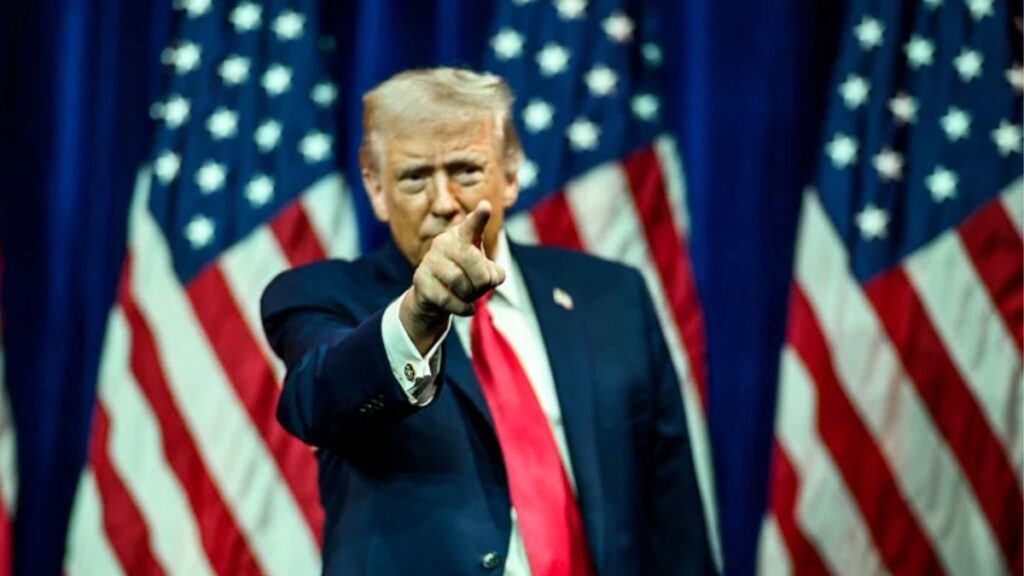
Donald Trump reportedly blamed “windmills” for the United Kingdom’s struggling economy, which hit a new low after the U.S.-Israel strikes on Iran that began on Feb. 28. However, recent reports highlight broader factors.
The airstrikes targeted Iranian military, nuclear, and leadership infrastructure, especially in Tehran, Kermanshah, Qom, Karaj, Shiraz, and Bushehr.
The conflict escalated when Iran launched retaliatory attacks on nations allied with or hosting U.S. and Israeli interests, including oil facilities, ports, and military bases in Oman, Qatar, and the United Arab Emirates (UAE).
View this post on Instagram
The International Monetary Fund (IMF) has downgraded Britain’s economic outlook more than any other major economy. Finance Minister Rachel Reeves criticized the United States’ handling of the conflict, calling its strategy a “folly.”
According to Reuters, in its latest outlook, released Tuesday, April 15, the IMF cut the U.K’s projected GDP growth for 2026 to 0.8 percent, down from 1.3 percent.
When asked about the report in a Fox Business interview, Donald Trump dismissed the findings and said, “They gotta stop with the windmill,” without addressing the IMF’s conclusions about the U.K.’s decline.
According to The Mirror US, the 79-year-old complained that the U.K. government refused to approve new offshore drilling licenses, especially in the North Sea near Scotland.
The president said places like Aberdeen have abundant oil reserves but said environmental restrictions prevent economic growth. According to Trump, oil companies want to expand drilling but are blocked by “horrible environmentalists.”
View this post on Instagram
He urged the government to maximize its energy resources, repeating his demand to “drill, baby, drill,” and arguing the country is missing major opportunities.
“You know, they called me, they’re begging, ‘please speak to them.’ They made it impossible because of the environmentalists, the horrible environmentalists that hurt that country so badly.” Donald Trump said in the interview.
Later in a Truth Social banter, Donald Trump also compared the U.K. with Norway, saying Norway profits by selling oil to Britain at higher prices. However, the U.K. has a greater advantage of benefiting from the resources because of its favorable geographical position.
“Europe is desperate for Energy, and yet the United Kingdom refuses to open North Sea Oil, one of the greatest fields in the World. Tragic!!! Aberdeen should be booming,” he said.
“Norway sells its North Sea Oil to the U.K. at double the price. They are making a fortune. U.K., which is better situated on the North Sea for purposes of energy than Norway, should, DRILL, BABY, DRILL!!! It is absolutely crazy that they don’t… AND, NO MORE WINDMILLS!”
Reports indicate several U.S. commercial ships trying to pass through the Strait of Hormuz have been damaged, leading to the waterway’s closure.
This disruption rattled oil markets, causing soaring prices and a massive LPG shortage across several countries in Asia and the U.K. and average 3.2 percent in 2026, before gradually returning to the Bank of England’s 2 percent target by late 2027, which is slower than what was previously expected.
In a separate interview with Mirror US, Finance Minister Rachel Reeves claimed that it is important to remember that the Iran war is not their own, but it would still affect the United Kingdom. Reeves also called out Trump’s lack of planning and clarity regarding the developments of the conflict.
“I feel very frustrated and angry that the U.S. went into this war without a clear exit plan, without a clear idea of what they were trying to achieve.” Rachel Reeves said.
View this post on Instagram
Previously, Democratic Rep. Ro Khanna criticized Trump in the Bulwark podcast, saying he misunderstood global oil markets and had an unclear strategy for ending tensions involving Iran.
While Khanna further noted that Trump also shows occasional concern about the destruction and fatalities in Iran, he has not outlined a clear blueprint on how he would like to end it.