



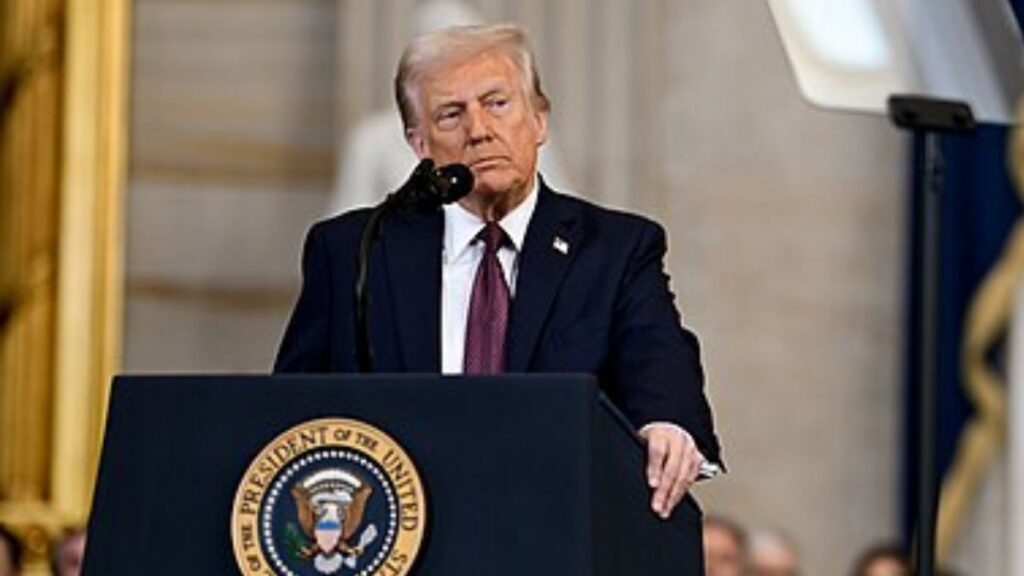
President Donald Trump on Wednesday, April 8, criticized media outlets such as CNN and The New York Times for their coverage of the peace plan between the United States and Iran.
The president took to Truth Social, writing, “The failing New York Times and fake news CNN each reported a totally fake ten-point plan on the Iran negotiations, which was meant to discredit the people involved in the peace process.”
Trump said all ten points referenced in their coverage “were a made-up hoax.”
Trump:
The Failing New York Times and Fake News CNN each reported a totally FAKE TEN POINT PLAN on the Iran negotiations which was meant to discredit the people involved in the peace process. All ten points were a made up HOAX – EVIL LOSERS!!! pic.twitter.com/jI8ntSTjAn
— Polymarket Intel (@PolymarketIntel) April 9, 2026
The 79-year-old announced in a Truth Social post that the United States and Iran agreed to a two-week ceasefire while negotiating a potential peace plan.
Following the announcement, The New York Times and CNN reported on a 10-point peace plan that would allow Iran to collect tolls from ships crossing the Strait of Hormuz, require the United States to withdraw its troops, and provide Iran the authority to continue enriching uranium.
In their coverage, CNN reported that Iran’s Foreign Minister, Abbas Araghchi, said that although the United States had accepted the “general framework” of Iran’s 10-point proposal as a “basis for negotiations,” Iran was considering a 15-point proposal from the United States.
The outlet further reported that the full details of the 15-point plan have not been published, but may include Iran committing to no nuclear weapons, handing over its highly enriched uranium, limiting Tehran’s defense capabilities, ending regional proxy groups, and reopening the Strait of Hormuz.
🔥IRAN’S PUBLIC PEACE PLAN DIFFERS FROM VERSION SENT TO TRUMP
A White House official says the 10-point proposal Iran released publicly is different from the version President Trump called a “workable basis” for negotiations, per NYT. pic.twitter.com/Vg1xBsRWpj
— Coin Bureau (@coinbureau) April 8, 2026
CNN also stated that Iran had earlier rejected the 15-point plan, with an official describing the demands as “largely excessive, unrealistic and unreasonable,” despite Trump claiming in late March that Tehran had agreed to “most of” the points.
Meanwhile, The New York Times reported that the peace plan came amid deadlines set by Trump and helped facilitate the two-week ceasefire.
The report framed the 10-point plan as Iran’s attempt to secure major concessions, such as sanctions relief and regional influence, in exchange for de-escalation on the Strait of Hormuz.
The coverage also mentioned that the plan reflects broader divides, with the short-term ceasefire providing an “offramp” but leaving core conflicts, such as the nuclear program, proxy groups, and Israel, unresolved.
According to the statement by the Supreme National Security Council, the 10-point plan mentions that there will be no new aggression against Iran, and there will be continued Iranian control over the Strait of Hormuz.
🚨 BREAKING: A White House official just confirmed that Iran’s maximalist 10-point peace plan is NOT THE ONE President Trump publicly said was a “workable basis on which to negotiate” — NYT
To reiterate: Trump DID NOT agree to these points, no matter how much Iran or other… pic.twitter.com/JzWqJlY145
— Eric Daugherty (@EricLDaugh) April 8, 2026
The plan also calls for the removal of all primary and secondary sanctions, along with the termination of United Nations Security Council and Board of Governors resolutions.
Moreover, there will be full compensation for war damages and reconstruction costs to Iran.
Some additional elements mentioned in related Iranian statements include the release of Iranian assets abroad, binding a United Nations Security Council resolution to enshrine the final deal under international law, and regulating passage through the Strait of Hormuz following the ceasefire.