



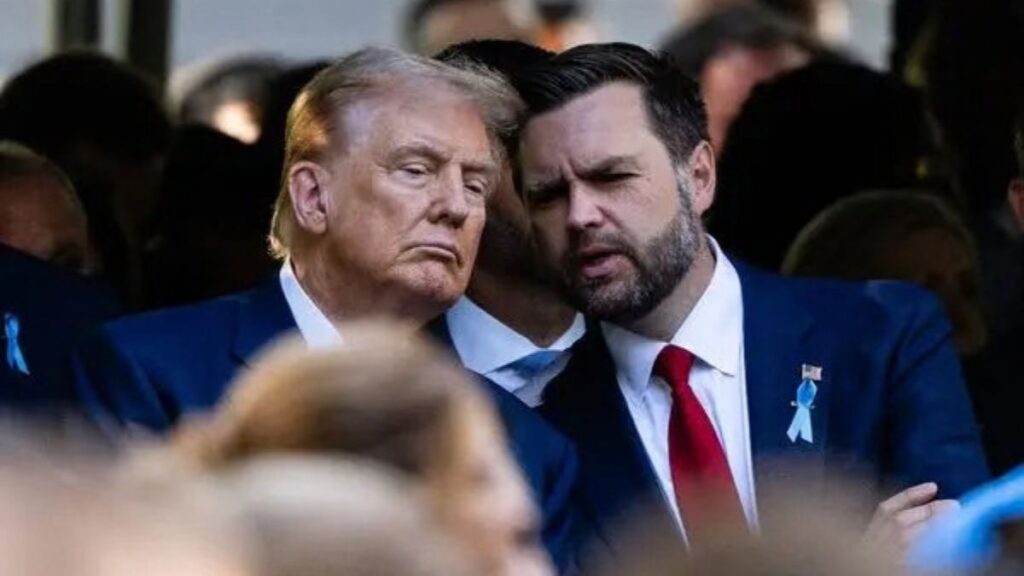
President Donald Trump said this week that Vice President JD Vance would be blamed if talks with Iran fail. He also stated he would take credit if an agreement is reached. This added a new political twist to the tense diplomacy as the administration seeks a way out of the escalating conflict.
Speaking at a White House Easter lunch on April 1, Trump inquired about the status of negotiations and joked, “If it doesn’t happen, I’m blaming JD Vance. If it does happen, I’m taking full credit.”
Trump expressed that he still believes Tehran might agree to the terms. After his comment about Vance, he said, “I think it has to happen. I think they’re desperate,” according to a video from the event.
The remark made the audience laugh, but it also placed Vance at the heart of one of the administration’s most delicate foreign policy efforts. The war with Iran is straining U.S. alliances, shaking up energy markets, and testing unity within the Republican Party.
Trump:
If the Iran deal doesn’t happen, I’m blaming JD Vance.
If it does happen, I’m taking full credit. pic.twitter.com/i88pQfn2ky
— Clash Report (@clashreport) April 1, 2026
Vance has become a visible part of the administration’s communication on Iran. Recently, he mentioned that the conflict would last “a little while longer” until Iran could no longer threaten the U.S. or force another military intervention, according to the New York Post.
The Associated Press also noted that Vance and Secretary of State Marco Rubio have different styles in discussing the war. Vance has taken a more cautious public approach, even while being tied to Trump’s policy.
At the same time, Trump has given mixed signals about how the conflict might end. On March 31, he told reporters in the Oval Office that the U.S. could conclude its military campaign in “two weeks, maybe three.”
He said Iran did not need to strike a diplomatic deal for the fighting to stop. Instead, Trump stated the operation would end once Iran had been “put into the stone ages” and cut off from any near-term path to a nuclear weapon.
“While we were engaged in negotiations, they struck us,” #Iran’s Kamal Kharazi told CNN on Mar. 9. Today his home was struck, wife killed, he sustained serious injuries. NYT reports Kharazi was discussing w Pakistan possible US-Iran negotiations w VP Vance pic.twitter.com/fv61PK8ES0
— Joyce Karam (@Joyce_Karam) April 1, 2026
This stance raises a key question about whether the administration is aiming for a negotiated settlement, a military resolution, or both at once. The Wall Street Journal reported that Trump’s joking comment about blaming Vance came during a discussion about the same Iran deal effort, where the president remarked that Vance was “doing a great job.”
Meanwhile, Reuters reported that Trump also suggested the U.S. could withdraw from the conflict without a formal agreement if he believes Iran’s capabilities have been sufficiently weakened.
These comments came at a time when the White House faces growing pressure to present a clear plan forward. The conflict, now more than a month old, has disrupted global energy markets and complicated Trump’s second-term agenda.
AP reported Thursday that oil prices surged more than 7% after Trump gave a national address on the war without outlining a detailed exit strategy. International leaders continue to urge for de-escalation and secure passage through the Strait of Hormuz.
For now, Trump is publicly keeping both options open with no clear strategy informed to the public. The president has both threatened more military force and seems open to a potential deal, while making Vance part of the narrative.
Whether Vance ends up bearing the blame or Trump claims success will likely depend on whether the administration can turn its public promises of progress into an actual agreement with Tehran in the coming days.