



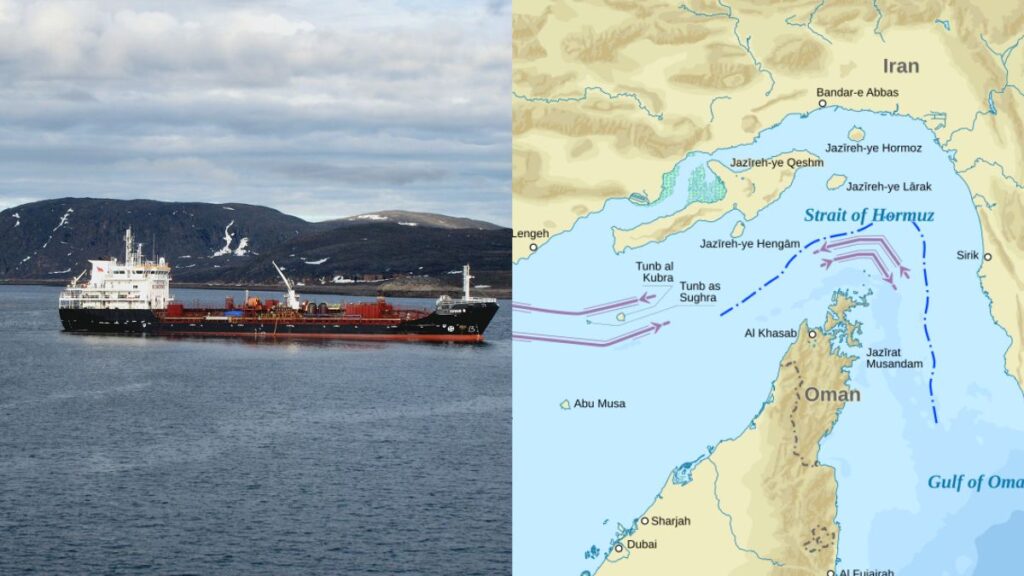
A major impact of the U.S. and Israel’s war with Iran has been seen in the Strait of Hormuz, disrupting about 20% of global oil distribution. After two weeks of oil cargo ship delays, several countries have been navigating the turmoil.
Now Iran has been selectively allowing some countries to pass through the Strait of Hormuz. Whether through currency changes in payments or demands for the release of seized Iranian vessels, the strategy appears to be working.
The Karachi, a Pakistani ship, was the first to pass through Hormuz with its automatic identification system (AIS) signal turned on. Apart from this, 20 other non-Iranian vessels have successfully made it through.
Tehran avoided targeting ships with Chinese ownership that were still broadcasting AIS signals, allowing shipments to continue toward their destinations despite the war. Eleven vessels linked to China have already crossed the Strait of Hormuz from March 1 to 15.
Ingraham: Seems like a continuing nagging problem with the Strait of Hormuz. We#39;re in our 20th day now. Why is this taking so long?
Miller: I would say the exact opposite Laura. How has this happened so fast? pic.twitter.com/7Dt4RlcHta
— Acyn (@Acyn) March 18, 2026
However, most of the vessels had their AIS turned off. According to expert Matthew Wright, a freight analyst, ships can go dark by switching off AIS to hide their identity. This can help them avoid attacks and remain off the radar. On the other hand, Wright believes Karachi was able to move through Hormuz with Iran’s guidance and was asked to keep its AIS on.
Wright told The Independent, “The amount of control Iran has over the waterway is significant. And they’ve been able to move their own cargoes pretty comfortably over the last two weeks. Now they are selectively managing oil flows through that checkpoint. At the moment, it appears to be friendly Asian partners.”
Meanwhile, Iran asked India to release the three tankers that were captured in February in exchange for the safe passage of vessels going to India. So far, at least 16 ships have been attacked since the war started on Feb. 28.
If you are still in USD game is about to change
Iran has allowed the first oil tanker to pass through the Strait of Hormuz after the shipment was paid for in Chinese yuan.
The ‘Karachi’ oil tanker carrying Das crude from Abu Dhabi, crossed the Strait of Hormuz pic.twitter.com/8GeZTt49DR
— Furkan Gözükara (@FurkanGozukara) March 17, 2026
About 743 cargo ships are still trapped in the Gulf, adding to shipping congestion. However, the number may be higher, Wright said, as several vessels have their AIS turned off and are difficult to track.
Last week, a dry cargo ship from Turkey passed through with Iran’s permission. Meanwhile, the SMYRNI oil tanker, owned by Dynacom, may not have sought permission and moved at least one ship across Hormuz. Wright explained they may have taken this risk since the rates are “very, very high.” Most Iranian oil is headed toward China, while non-Iranian oil is going to Pakistan and India.
Other key exporters include Kuwait, Qatar, Saudi Arabia, and the UAE.


