



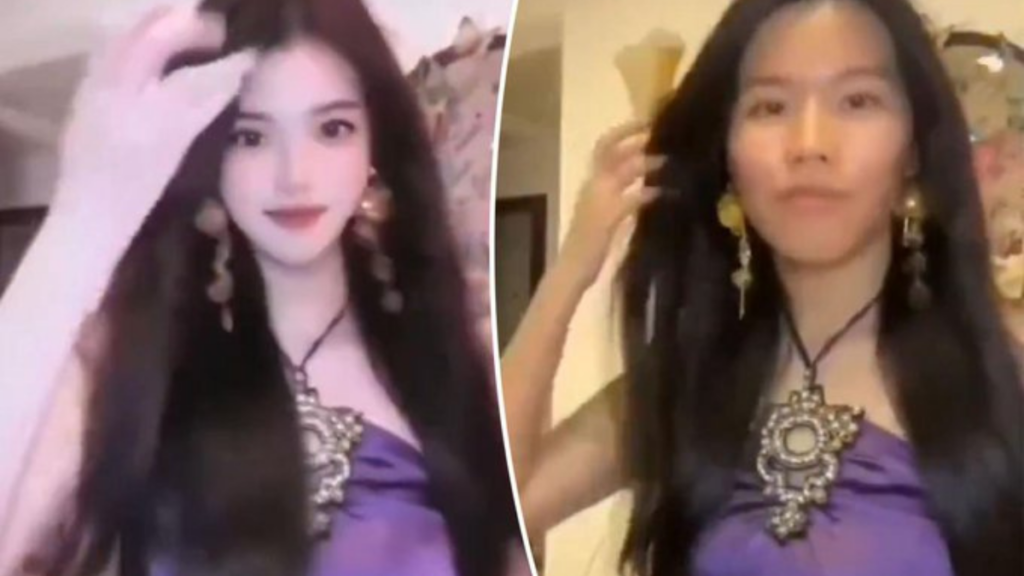
A Tik Tok beauty influencer is at the center of a viral storm after a filter glitch during a filmed video briefly exposed what viewers claim was her unedited appearance — triggering a reported mass unfollowing and intense online debate.
According to widely shared clips circulating on Threads, Tik Tok and other social platforms, the unnamed beauty influencer was in the middle of recording content when the aesthetic malfunction occurred. For a few fleeting seconds, the digital enhancements that had smoothed her complexion, sharpened facial contours of the Chinese beauty influencer and brightened her overall look appeared to switch off. The filter quickly reactivated — but not before viewers captured the moment.
This new AI powered beauty filter from TikTok is just insane.
I’m giving it a hard time here and it glitches just once when I’m covering my entire face.
“Bold Glamour” by TikTok pic.twitter.com/ScScU3AMaZ
— Linus ✦ Ekenstam (@LinusEkenstam) February 27, 2023
Screen recordings spread rapidly, with side-by-side comparisons flooding comment sections. Within hours, online chatter claimed the influencer had lost roughly 140,000 followers in the aftermath of the incident.
While that number has not been independently confirmed, the reaction was swift and polarizing. Some critics accused the beauty influencer of misleading her audience by presenting a heavily filtered persona as reality. Others questioned how commonplace extreme digital alterations have become in the influencer economy, where real-time beauty filters can dramatically reshape facial structure, adjust skin tone and even alter perceived age.
Yet not everyone joined the pile-on. “I think she’s so much more prettier than the filter,” one commenter wrote under a reposted clip. “She’s literally so beautiful I can’t, I’m so mad for her,” another added, expressing frustration over what they viewed as unnecessary outrage.
The incident has reignited broader questions about authenticity on Tik Tok, a platform where visual perfection often translates directly into engagement and income. Beauty influencers frequently rely on filters as part of their production toolkit, alongside makeup artistry, lighting setups and camera angles. Supporters argue that such tools are simply part of content creation in 2026 — no different from Photoshop or post-production editing in earlier internet eras.
However, critics say the line blurs when filters operate seamlessly in livestreams, creating the impression of natural appearance rather than stylized enhancement. When technical glitches expose the contrast, it can prompt accusations of digital “catfishing.”
It also remains unclear whether the viral “facial fiasco,” as some online users have dubbed it, was entirely authentic or amplified by social media speculation. The influencer has not publicly confirmed the reported follower loss, and follower counts on large accounts can fluctuate for a variety of reasons.
Still, this is far from the first time a filter malfunction has caused controversy. In 2019, Chinese livestream personality Your Highness Qiao Biluo stunned fans when a mid-broadcast glitch reportedly removed a digital overlay that had disguised her appearance. Viewers who believed they were watching a young woman were shocked when the filter dropped, revealing someone older than they had expected. That moment also went viral, sparking fierce debate about deception, beauty standards and online identity.
Like that earlier case, the current Tik Tok uproar highlights the high stakes of influencer branding. For many content creators, follower counts are directly tied to sponsorship deals, advertising contracts and algorithm visibility. A reported loss of 140,000 followers — if accurate — could represent a significant financial setback.
At the same time, viral controversy often fuels curiosity. Some viewers who first encountered the influencer through the backlash may ultimately become new followers. In the fast-moving ecosystem of Tik Tok, outrage and opportunity frequently overlap.
Whether exaggerated or exact, the reported follower drop underscores how fragile online personas can be in the age of AI-enhanced beauty. A few unfiltered seconds — accidental or otherwise — can ignite global scrutiny and reopen ongoing debates about what authenticity truly means in a digital world increasingly