



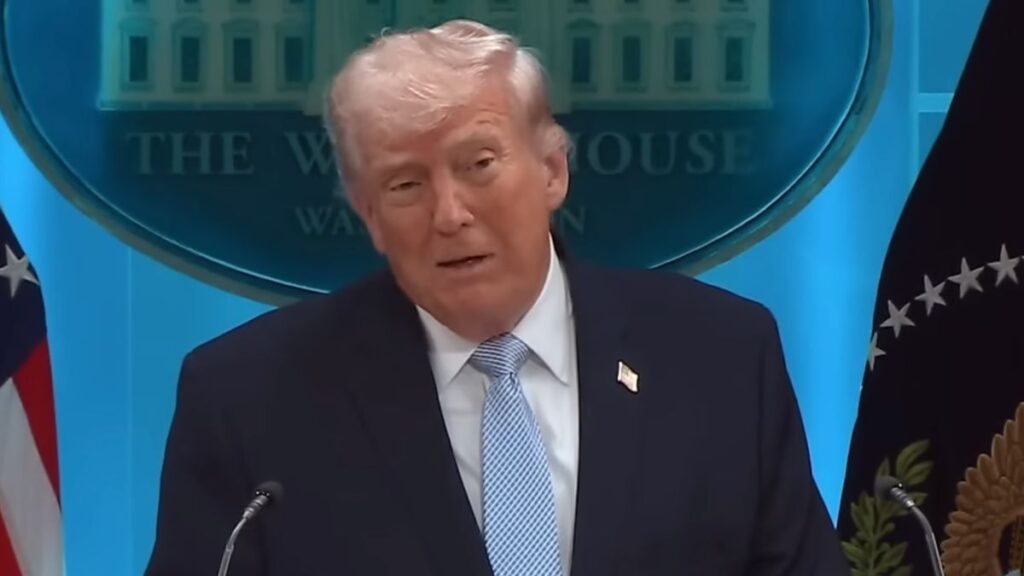
Renowned clinical psychologist Dr. Tracy King analyzed President Donald Trump’s behavior following his recent White House press conference, where he addressed the ongoing conflict with Iran and referenced North Korean leader Kim Jong Un. The remarks prompted discussion about what they reveal about his communication style.
According to a report by The Mirror U.S., the psychologist said Trump appeared to rely on exaggeration as a rhetorical tactic throughout the speech. She explained that this approach can amplify the perceived severity of events.
During a press conference focused on the Iran war, US President Donald Trump jokingly said he would learn Spanish and “run for president of Venezuela” after he was done serving as US president. He claimed that he would win easily with his high polling numbers. In his speech, he… pic.twitter.com/IO3PYCx4ZS
— TRT World (@trtworld) April 7, 2026
King said such messaging “pushes people toward fear, excitement or alarm before they have time to weigh anything calmly.” As an example, she pointed to Trump emphasizing U.S. military achievements amid tensions with Iran.
The psychologist said the speech appeared structured in three parts: an initial broad and amplified framing, a segment directed at adversaries, and a portion aimed at both critics and supporters.
Beyond exaggeration, King also addressed Trump’s messaging toward Iran. She noted that his recent statements — including posts on his Truth Social account — have included repeated threats and forceful language.
US President Donald Trump delivering a speech at the White House alongside the Easter Bunny
Trump highlights recent achievements of the US military, including the rescue missions of both airmen of the F-15E fighter jet that was downed over Iran. pic.twitter.com/KVZTW2rPB4
— Roya News English (@RoyaNewsEnglish) April 7, 2026
King said the speech may resonate differently depending on the audience. “The speech works differently depending on who’s hearing it,” she said, adding that it can still have a psychological impact by triggering emotional responses.
That dynamic may help explain the polarized reactions online, with some supporting the president’s remarks and others criticizing them.
King added that Trump appears focused on projecting strength. The psychologist said he does not want to be perceived as “weak, absent or diminished,” but rather as a figure associated with “force, rescue, retaliation and control.”
READ NOW: Democrats Plot Impeachment of Trump a Third Time — A poll commissioned by Free Speech For People found 52% of likely 2026 voters support impeaching President Donald…https://t.co/mYNCBtH53D
— Top News by CPAC (@TopNewsbyCPAC) April 6, 2026
She suggested the tone of the speech may also reflect Trump’s perception of criticism against him, which could influence his messaging style.
Addressing his approach toward Iran, the psychologist described the strategy as unpredictable and “hard-hitting,” adding that there may be a psychological rationale behind it. She said such tactics can keep opponents uncertain and concerned about potential escalation.
‘We’re sinking deeper’: Iranians brace for infrastructure strikes as Trump deadline nears https://t.co/ORhJDsT7ge
— BBC News (World) (@BBCWorld) April 6, 2026
Trump has continued to make strong statements about Iran on social media. He recently warned of potential infrastructure damage on April 7, 2026. Reports by The Guardian indicated that infrastructure was damaged, though details remain limited.
It remains unclear whether further escalation will follow or if there may be room for negotiations.