



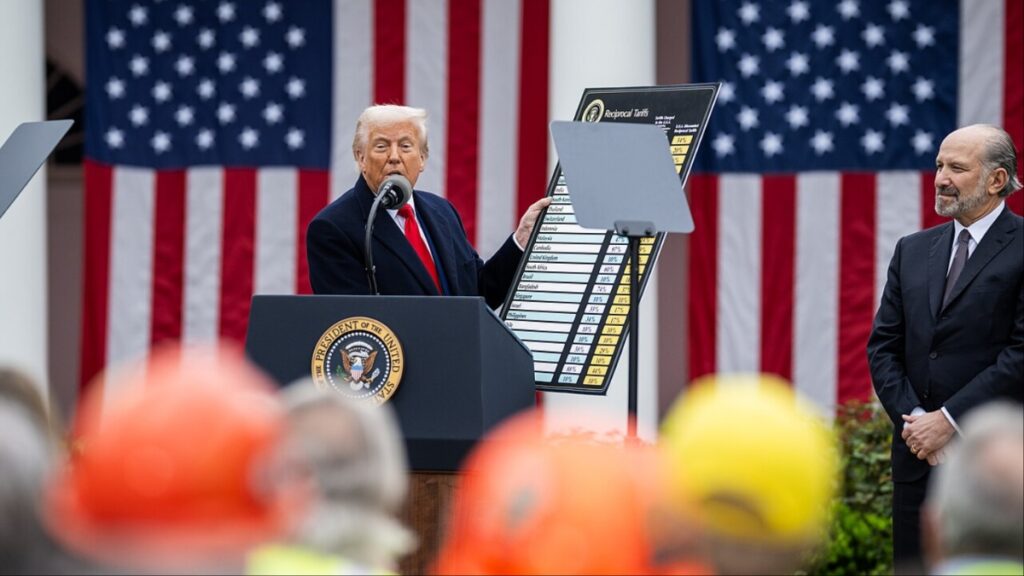
Americans could receive direct payments under a new House proposal aimed at offsetting higher consumer costs linked to tariffs, though the measure is far from becoming law.
Rep. Henry Cuellar, a Texas Democrat, introduced H.R. 7865, the American Consumer Tariff Rebate Act of 2026, on March 11. The bill would send money directly to consumers after the U.S. Supreme Court ruled in February that tariffs imposed under the International Emergency Economic Powers Act were not authorized by that law.
Cuellar’s office stated that the legislation is designed to help households that absorbed higher prices on everyday goods while excluding taxpayers with adjusted gross income above $400,000. The proposal would also include a $125 payment for each qualifying child.
Using current IRS return estimates, Cuellar’s office said payments for South Texans would average about $1,020 for single filers, $1,530 for heads of household, and $2,040 for married couples filing jointly.
“Tariffs act as hidden taxes on families and create uncertainty for businesses,” Cuellar said in a statement announcing the bill. “When companies pay more to import goods and materials, those added costs are passed on to consumers, driving up prices on groceries, fuel, energy, vehicles, auto parts, building materials, and other everyday household items.”
This week, I introduced my bill, H.R. 7865, the American Consumer Tariff Rebate Act, to return money directly to consumers after the Supreme Court ruled the administration’s retaliatory tariffs unconstitutional.
Tariffs have increased prices on groceries, fuel, vehicles and…
— Rep. Henry Cuellar (@RepCuellar) March 11, 2026
He mentioned that the bill aims to provide relief through an approach that is secure, efficient, and focused on those most affected by rising prices.
The proposal comes as tariffs remain a significant issue in Washington and the broader economy. In its Feb. 20 ruling, the Supreme Court stated that IEEPA does not authorize a president to impose tariffs, affirming a lower-court finding that the administration had exceeded its authority under the 1977 statute.
Associated Press reported that the decision struck down some of Trump’s most significant tariffs while leaving other levies imposed under different legal authorities intact.
That ruling also triggered a scramble over refunds for importers that had paid the invalidated tariffs. U.S. Customs and Border Protection stated this week that a new refund system is still being developed and that payments to importers may take as long as 45 days once processing begins.
Reuters reported that the agency is creating the system to handle roughly $166 billion in tariff collections declared illegal by the court.
Small business owner: Since Trump announced his so-called Liberation Day, we’ve received thousands of price increases from our suppliers. Price changes have cost my business and my customers thousands of dollars. The imprudent, reckless, and constant yanking of the tariff leash… pic.twitter.com/Qqbl3ac1kB
— FactPost (@factpostnews) April 2, 2026
Cuellar’s bill focuses on consumers, not importers seeking those court-ordered refunds. The rebate proposal would still need to pass through the House Ways and Means Committee, clear both chambers of Congress, and be signed by the president before any payments could be distributed.
The legislation comes amid an ongoing debate about how much tariffs have added to household costs. The Budget Lab at Yale stated in an April 2 analysis that the current tariff regime suggests a short-run consumer price increase of about 1% if temporary tariffs are extended, equal to a loss of roughly $1,338 per household in 2025 dollars.
For now, the proposed checks remain just that, a proposal. However, the bill adds a new political angle to the tariff debate by shifting the focus from trade policy to how, and whether, households should be compensated.


