



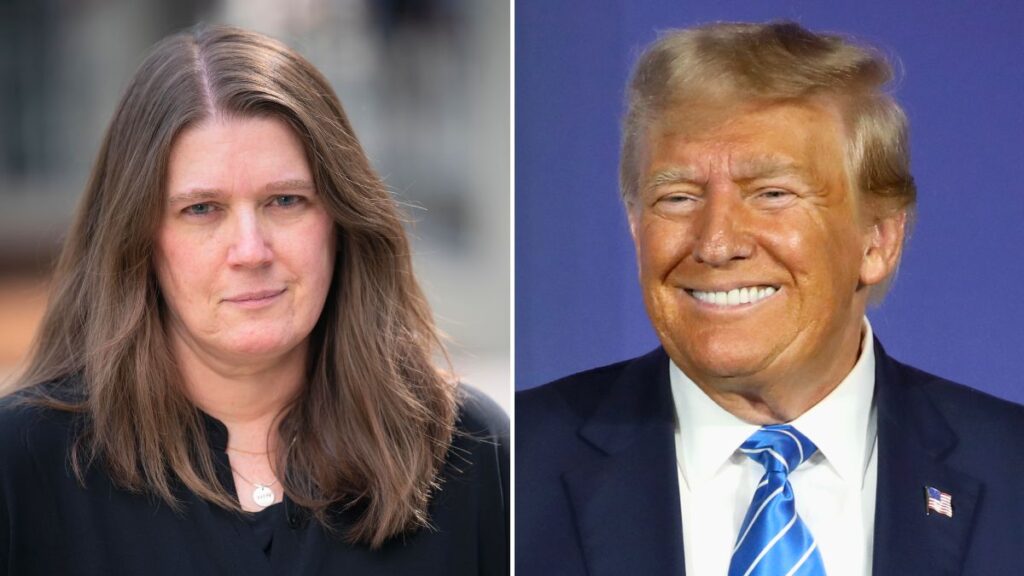
In a recent interview, psychologist Mary Trump, the niece of President Donald Trump, said she has noticed “concerning changes” in the president’s behavior. Mary Trump said that there are times when her uncle appears confused or disoriented, and she feels that these moments make him look a lot like her grandfather, Fred Trump Sr., who was diagnosed with Alzheimer’s disease.
She pointed to instances where Trump does not seem fully ‘oriented to time and place,’ and that she has even noticed a “deer-in-the-headlights” expression. On a podcast, she said she sometimes sees the same look of confusion she once observed in her grandfather. Mary Trump said she believes the issues go beyond slight mistakes. She added that members of her family have previously experienced dementia and believes there may be signs of poor impulse control and short-term memory.
However, no public clinical examination has confirmed these claims.
From the outset, Iran has consistently affirmed its position: “We do not seek nuclear weaponry.”
Trump: Iran cannot have a nuclear weapon.
Alzheimer’s symptoms:
“Something’s wrong, I can feel it.” pic.twitter.com/c4ZVI66Gko
— Iran Embassy in Zimbabwe (@IRANinZIMBABWE) April 6, 2026
Medical experts say diagnosing conditions such as Alzheimer’s requires comprehensive testing and cannot be based solely on observation.
The Mayo Clinic defines dementia as an umbrella term for symptoms affecting memory, thinking, and social abilities severely enough to interfere with daily life, and Alzheimer’s is its most common cause.
Symptoms can include memory loss, difficulty communicating, confusion about time or place, impaired judgment, and personality changes. However, the same experts warn that occasional forgetfulness or confusion can be a normal part of aging and does not always mean a neurodegenerative disease is going to be diagnosed. That nuance gets lost in political discourse, though.
The Alzheimer’s Society has also cautioned against what it calls “diagnosing from a distance.” In a 2026 note on politics and dementia, the organization states that it is neither accurate nor ethical to make a diagnosis without a proper medical assessment. It adds that such claims can stigmatize people living with dementia and reduce complex medical conditions to rumors.
I’ve heard that a doctor said the other day that Trump is in the starting stages of dementia or Alzheimer’s. You would think he could be removed because of that?
— Todd B (@John_Beckham14) April 1, 2026
Trump has dismissed the accusations, too. He agreed that Fred Trump Sr. had “an Alzheimer’s thing” in his late 80s in response to comparisons to his father’s condition, but he insisted that he did not have such issues.
“I don’t have it,” he said.
Trump’s health is constantly examined during his second term in office. His overall health has been speculated over the past year based on his public appearances, regular hospital visits, and bruises on his hands and fingers.
Official medical records have also shown that the president underwent cognitive testing, including the Montreal Cognitive Assessment (MoCA).
However, he frequently refers to the assessment as an “IQ test,” which is not an IQ test.
Donald Trump Confuses Dementia Screening for ‘Very Hard’ IQ Test as He Brags About Results https://t.co/RwujqZWJaZ
— People (@people) October 27, 2025
There is a public interest in the health of leaders, particularly those holding the highest office. But as the Alzheimer’s Society points out, many factors (like fatigue, stress, poor sleep, or even unfamiliarity with a topic) could make someone look confused.
Without a full clinical evaluation, conclusions about dementia remain speculative.


