



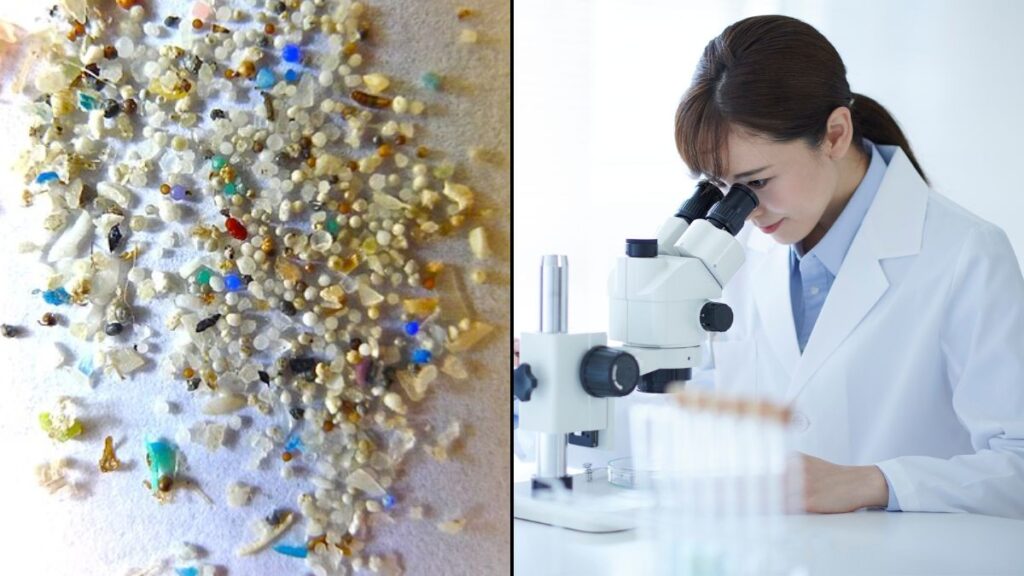
Microplastics have become a growing environmental concern across the world. It has been commonly found in food and even in breast milk. Now, it has found its way in another part of the human body: the prostate glands. To be more specific, a new study has discovered microplastics in the cancer tumors of the prostate.
A study conducted by a team of 10 researchers presented this startling discovery to the American Society of Clinical Oncology for its Genitourinary Cancer Symposium. NBC News reported that the study has not yet been published officially by a peer-reviewed journal. Details about the same are to be followed after these findings are thoroughly reviewed.
About the study, the researchers sampled cancerous and non-cancerous tissues from 10 different people who were suffering from prostate cancer. The anonymous patients were mostly around the age of 65. Only the prostates of those who had the part removed as a means to save their lives were collected as samples for the research.
In a new study, researchers found microplastics deep inside prostate cancer tumors, raising more questions about the role the ubiquitous pollutants play in public health. https://t.co/sLC9YBJY6I
— NBC News Health (@NBCNewsHealth) February 23, 2026
Alarmingly, 90 percent of the cancerous tissue cells showed the presence of microplastics. Whereas, in the non-cancerous tumors, there was a 70 percent visibility of microplastics. This is not good news on either side.
The cancerous tissues roughly contained nearly three times more than the usual amount of microplastics. The non-cancerous tissues were reportedly found with 40 micrograms of plastic per gram of prostate cancer tumor tissue. This means that the amount of microplastic discovered in both cancerous and non-cancerous tissue samples is unusually high. Which, again, is not good news at all.
Lead author of the alarming study, Dr. Stacy Loeb, also claimed that these findings were “very surprising and concerning.” That is because this prompts us to really check on how much plastic we’re truly consuming and where this plastic has traveled in the human body.
Medically, microplastics are not credited for causing prostate cancer, but Dr. Loeb claimed that this new study gives cause to consider it. The expert said, “This is definitely something we’re going to continue to study further with more cases.”
Scientists have found microplastics in human brain tissue.
Read more @YaleE360: https://t.co/693aCNCiKN pic.twitter.com/17xOaKxAd4
— Yale Environment 360 (@YaleE360) August 22, 2024
As the medical expert pointed out, it’s definitely going to take a whole lot more research to conclude that the cause of prostate cancer is microplastics. For now, researchers continue to test various samples with results highly awaited by many more in the medical field.
While many in the medical field continue to await new results, experts emphasize the seriousness of microplastic pollution in the human body. Previously, other studies have revealed microplastic presence in the heart, arteries and veins, brain and other organs and parts of the human body.
Naturally, this has sparked alarm bells, causing many to re-examine lifestyle choices.
Awful sight of plastic microfibers in my plankton sample today. Just 2mm long, they form a deadly, zooplankton trapping, drift net that is likely to be eaten by fish to enter the food chain. The scale of this problem cannot be underestimated. @zeiss_micro pic.twitter.com/nYQs6i4Xb8
— Dr Richard Kirby (@PlanktonPundit) April 10, 2018
Moreover, with the ongoing struggle for proper waste disposal into the ocean and the unfortunate, unending cycle of microplastic pollution, scientists have been hard at work to discover sustainable means of curbing the pollution before it becomes even worse.
Dr. Andrea Viale, an associate professor at the Department of Genomic Medicine at the MD Anderson Cancer Center in Houston, Texas, also commented on the new study. Dr. Viale said, “The fact that it is being discovered in tumors means that from a public health perspective, this issue deserves really serious attention.”
The expert highlighted the importance to find solutions to “limit exposure” since microplastics shouldn’t technically be even remotely present in a prostate gland — cancerous or non-cancerous.