



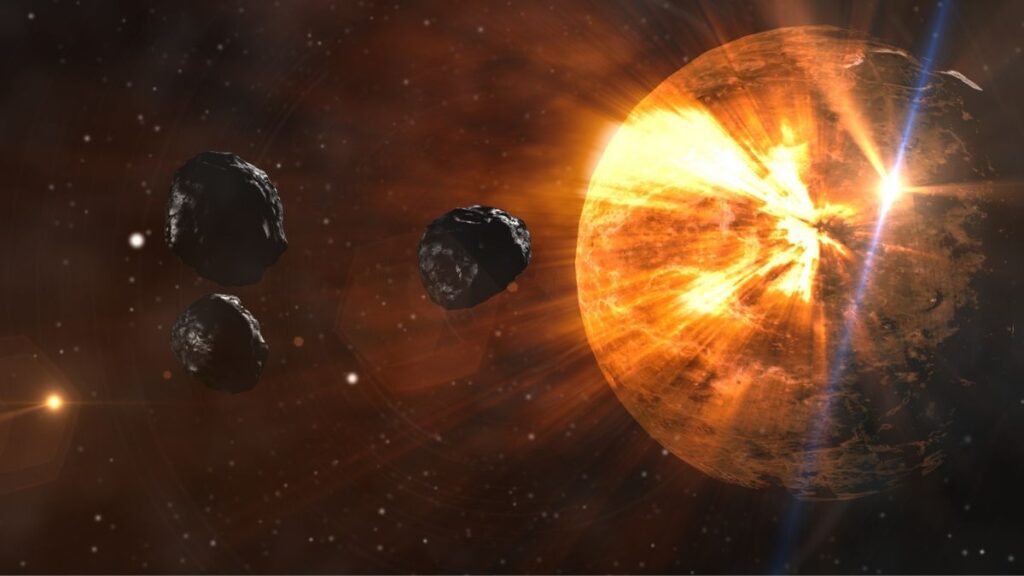
The National Aeronautics and Space Administration (NASA) has issued a stern warning after the agency’s head of planetary defense revealed that at least 15,000 mid-sized asteroids are floating around in space. According to the space agency, the location of these space rocks is yet to be discovered. However, they have been dubbed “city killers” due to their gigantic size, which is believed to be at least 140 meters in diameter.
Kelly Fast, who is in charge of tracking any space objects such as asteroids and comets, said that if any of these “city killers” were to hit Earth, it could “really cause regional damage.” During the American Association for the Advancement of Science annual conference in Phoenix, Fast admitted that these mid-sized asteroids are what worry her the most now.
More than half of the “city killer” asteroids that might threaten Earth remain undiscovered. With an infrared eye, NASA’s NEO Surveyor aims to find them.
Learn more: https://t.co/7MH6A2ZRmb @NewsfromScience pic.twitter.com/ZOA8mA1McA
— Science Magazine (@ScienceMagazine) December 27, 2025
“What keeps me up at night is the asteroids we don’t know about. Small stuff is hitting us all the time so we’re not so much worried about that,” she said at the conference.
“And we’re not so worried about the large ones from the movies because we know where they are. It’s the ones in between, about 140 meters and larger, that could really do regional rather than global damage and we don’t know where they are,” Fast added.
She continued, “It’s estimated there are about 25,000 of those and we’re only about 40 percent of the way through. It takes time to find them, even with the best telescopes.”
Nancy Chabot, a planetary scientist at Johns Hopkins University, also issued a similar warning. Chabot claimed that if one of these asteroids were to plummet into our Earth, the planet would fail miserably to defend itself.
NEW: NASA Reports ‘City Killer’ Asteroid’s Odds of Striking Earth in 2032 Are Historic
February 18: 3.1%
February 17: 2.6%
February 16: 2.2%
2024 YR4 now has the highest risk assessment for an asteroid ever recorded. pic.twitter.com/UEcHJXbSRZ
— UAP James (@UAPJames) February 19, 2025
“We worry about these city killer asteroids. DART was a great demonstration, but we don’t have [another] sitting around ready to go if there was a threat that we needed to use it for,” Chabot said. She was referring to a 2022 mission she led called the Double Asteroid Redirection Test (DART).
The mission proved that during an emergency, if an asteroid were to come very close to the Earth, we could use a rocket to deflect it off course. However, according to the expert, it could be quite impossible if the disaster were to truly strike again.
“If something like YR4 had been headed toward the Earth, we would not have any way to go and deflect it actively right now. We could be prepared for this threat. And I don’t see that investment being made,” said Chabot.


